
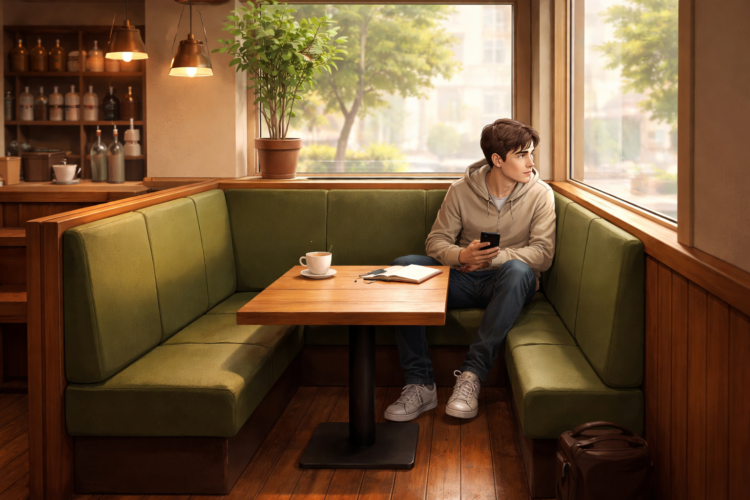
Human behavior often reveals subtle psychological patterns, and seat selection is one such behavior. Many people instinctively choose corner seats in classrooms, restaurants, offices, or public spaces. While it might appear like a simple habit, psychologists believe it can reveal deeper insights into personality, comfort preferences, and social behavior.
Research in environmental psychology suggests that people tend to develop territorial habits around seating, often selecting the same position repeatedly because it creates a sense of familiarity and control. Studies of lecture halls show that individuals frequently sit in the same location during multiple sessions to create a small personal territory that increases comfort and reduces uncertainty.

Additionally, the location of a seat may reflect introversion, safety needs, strategic thinking, and environmental awareness. This article explores what it means psychologically when someone consistently chooses corner seats and how this behavior might shape interactions, productivity, and personality expression.
The Psychology Behind Choosing Corner Seats
From a psychological perspective, corner seating provides a sense of control and security. Corners naturally reduce the number of directions from which people can approach, making the environment feel less overwhelming.
Researchers suggest that seating choices reflect comfort, control, and social interaction preferences. People choose certain seats because they subconsciously align with their personality traits or emotional needs.

Corner seats specifically offer:
- Greater visual awareness of the room
- Reduced social pressure
- Increased feeling of privacy and safety
In evolutionary terms, corners allow people to observe their surroundings without feeling exposed. This instinctive behavior is linked to survival psychology, where visibility and security were essential for safety.
Personality Traits Linked To Corner Seat Preferences
People who regularly select corner seats often share certain personality characteristics. Although this is not universal, several psychological patterns are commonly observed.
Introversion And Personal Space

Many individuals who choose corner seats tend to value personal space and solitude. Introverted people often prefer locations where they can observe others without being the center of attention. Studies exploring seating preferences show that introverted individuals are more likely to select peripheral or end seats rather than central ones in group environments.
Observational Personality
Corner seating allows a person to see most of the room. This makes it appealing to individuals who like to observe interactions before participating.
These individuals often display:
- Analytical thinking
- Awareness of social dynamics
- Strategic decision-making
Desire For Control And Stability
Corner seats create a sense of predictability and control over the environment. Psychological studies indicate that reserving or choosing a specific seat gives the brain a feeling of certainty and reduces stress.
Calm And Focused Mindset
People who prefer corner seats may also seek reduced distractions, helping them focus better in classrooms, meetings, or public environments.
Social And Behavioral Advantages Of Corner Seats
Choosing a corner seat is not always about avoiding others. In many situations, it offers practical advantages in social interaction. For example, sitting diagonally across from someone at a table creates a cooperative atmosphere rather than a competitive one. This seating position can encourage collaboration and trust in conversations.
Corner seats also allow people to:
- Engage when necessary
- Withdraw temporarily when needed
- Maintain balanced social interaction
Research Findings On Seating Behavior
Several psychological and academic studies have explored the connection between seating positions and behavior.
Below is a summary of key insights from research.
| Aspect | Research Insight | Behavioral Meaning |
|---|---|---|
| Seating repetition | Many individuals choose the same seat repeatedly | Creates territorial comfort |
| Peripheral seating | Often preferred by introverted individuals | Desire for personal space |
| Corner positioning | Offers visual control of surroundings | Sense of safety and awareness |
| Environmental familiarity | Predictable seating reduces anxiety | Psychological stability |
| Strategic placement | Allows observation before participation | Analytical personality |
Research also suggests that seating choice is rarely random. Instead, it reflects a combination of personality traits, motivation, and situational factors.
Situations Where People Prefer Corner Seats
Corner seats are common across multiple environments. Each setting highlights different psychological motivations.
Classrooms
Students who prefer corners may want less attention from instructors while still being able to observe lectures and classmates.
Restaurants And Cafes
In social settings, corner seats offer privacy and comfort, allowing individuals to relax without feeling surrounded.
Offices And Meetings
Professionals often choose corner positions because they allow them to see everyone in the room while remaining slightly detached.
Public Transportation
Some commuters select corner or window seats to create a physical barrier from crowded spaces.
Future Trends In Seating Psychology
As workplace design and public spaces evolve, seating psychology is becoming more important. Modern architecture increasingly includes:
- Semi-private seating pods
- Corner lounge areas
- Personal workspaces
Designers are recognizing that human comfort is strongly linked to spatial positioning, and seating arrangements can influence productivity, collaboration, and mental well-being. In the future, smart workplaces may even use behavioral data to design environments that match individual personality preferences.
Conclusion
Choosing a corner seat may seem like a simple habit, but psychology suggests it often reflects deeper behavioral patterns. Individuals who consistently pick corner seats may value privacy, observation, control, and reduced distractions. These positions provide a sense of security while still allowing engagement with others when necessary.
Research indicates that seating preferences are influenced by personality traits, environmental comfort, and social strategies. As workplaces and social spaces continue evolving, understanding seating psychology could help create environments that support both productivity and well-being. Ultimately, the next time someone chooses a corner seat, it might reveal more about their mindset than you expect.
FAQs
Is choosing a corner seat a sign of introversion?
Often yes, but not always. Introverts frequently prefer corners for privacy, though strategic thinkers and observers may also choose them.
Why do corner seats feel safer?
Corners limit the number of directions from which people can approach, giving a psychological sense of control and awareness.
Do seating habits reveal personality traits?
Yes. Research suggests seating preferences can reflect personality characteristics such as confidence, social comfort, and observational tendencies.