
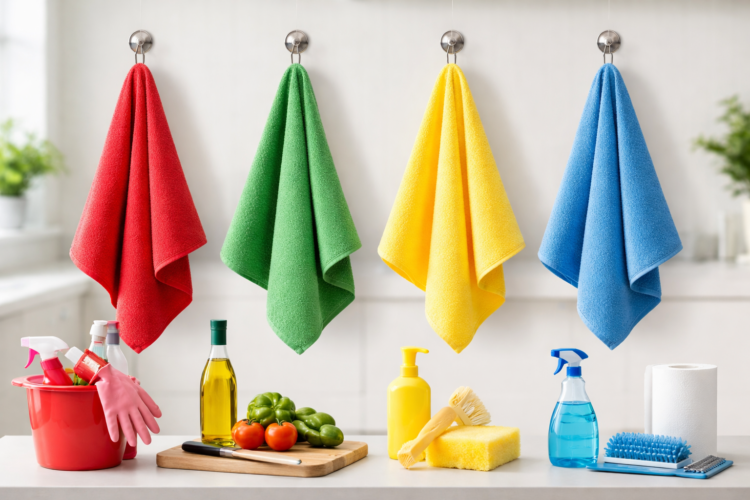
Maintaining a clean kitchen is essential for food safety, hygiene, and health protection. One simple but powerful habit that professionals and food safety experts recommend is using color-coded kitchen towels. This system assigns specific towel colors to specific cleaning tasks or areas, making it easier to avoid cross-contamination and keep your kitchen safe.
Color-coded cleaning is widely used in restaurants, healthcare facilities, and professional kitchens because it helps prevent germs from spreading between surfaces. By visually identifying which towel should be used where, cleaning becomes faster, more organized, and significantly safer.

In modern kitchens, adopting the color-coded towel system is increasingly becoming a standard practice that improves sanitation, efficiency, and long-term cleaning habits.
What Is Color-Coded Kitchen Towel Cleaning?
Color-coded cleaning is a system where different colored towels are assigned to specific cleaning zones or tasks in order to prevent contamination between surfaces. For example, a towel used to clean bathroom surfaces should never be used in food preparation areas. By assigning each towel a color for a specific purpose, people can instantly identify where each towel should be used.
This approach is widely recommended in hygiene systems because it prevents the transfer of bacteria, viruses, and other contaminants from one area to another.
Why Color-Coded Towels Improve Kitchen Safety
1. Prevents Cross-Contamination

One of the biggest risks in kitchens is cross-contamination, which occurs when bacteria from one surface spreads to another.
For example:
- Raw meat bacteria on a towel can spread to countertops.
- A towel used for floors may contaminate food surfaces.
By using a designated towel color for each area, these risks are greatly reduced.
2. Makes Cleaning Faster and More Efficient

Color-coded towels allow anyone in the kitchen to quickly identify the correct cloth for each task. This reduces confusion and speeds up cleaning routines. In busy kitchens, where multiple cleaning tasks occur throughout the day, this system helps staff work more efficiently and maintain higher hygiene standards.
3. Supports Food Safety Standards
Many food safety systems such as HACCP (Hazard Analysis and Critical Control Points) encourage structured cleaning practices like color coding to prevent contamination. Professional kitchens rely on this system because it helps maintain compliance with modern hygiene regulations and food safety protocols.
Standard Color Codes for Kitchen Cleaning Towels
The most common global color coding system uses four main colors. Each color represents a specific cleaning zone.
| Color | Typical Use Area | Risk Level | Purpose |
|---|---|---|---|
| Red | Toilets, washrooms, and sanitary areas | High risk | Prevent bathroom bacteria spreading |
| Green | Kitchens and food preparation areas | High food safety risk | Clean food-contact surfaces |
| Blue | General areas such as desks or counters | Low risk | Everyday cleaning |
| Yellow | Wash basins, sinks, mirrors, and restroom surfaces | Medium risk | Secondary sanitation tasks |
This simple system ensures that towels used in high-risk areas are never reused on food preparation surfaces.
Why Microfiber Towels Are Often Recommended
Many modern kitchens now use microfiber towels instead of cotton cloths. Microfiber towels are designed with ultra-fine synthetic fibers that trap dirt, grease, and microorganisms more effectively than traditional fabrics.
Studies and industry tests show that microfiber cloths can remove up to 99% of bacteria when used correctly with proper cleaning solutions.
Advantages of microfiber towels include:
- Better dirt and bacteria removal
- Highly absorbent material
- Durable and reusable
- More effective surface cleaning
Because of these benefits, microfiber cloths are commonly used in professional kitchens, hospitals, and cleaning services.
How To Start Using Color-Coded Towels At Home
Implementing this system in your home kitchen is simple and inexpensive.
Step 1: Buy Multiple Colored Towels
Purchase kitchen towels in at least four distinct colors.
Step 2: Assign Each Color A Task
For example:
- Green – Food preparation surfaces
- Blue – General kitchen cleaning
- Yellow – Sink and dishwashing area
- Red – Floor or bathroom cleaning
Step 3: Store Them Separately
Keep each towel group in a specific storage location to avoid mixing them.
Step 4: Wash Towels Regularly
Wash towels in hot water after use to eliminate bacteria and prevent odor buildup.
Additional Hygiene Tips For Safer Kitchen Cleaning
To maximize the benefits of the color-coded towel system, follow these best practices:
- Always clean from cleanest areas to dirtiest areas
- Replace worn-out towels regularly
- Never use the same towel for raw meat and ready-to-eat food surfaces
- Disinfect cloths regularly with hot water or sanitizing solutions
Following these practices ensures the system remains effective and hygienic.
Future Trends In Kitchen Cleaning Systems
The future of kitchen hygiene is moving toward smarter and more hygienic cleaning solutions.
Some emerging trends include:
- Antimicrobial microfiber towels that inhibit bacterial growth
- AI-enabled sanitation monitoring systems in commercial kitchens
- Eco-friendly reusable cleaning cloths to reduce waste
- Digital color-coded cleaning protocols used in restaurants and food production facilities
As food safety standards continue to evolve, color-coded cleaning systems will likely become even more common in homes and professional kitchens.
Conclusion
Adopting the color-coded kitchen towel habit is one of the simplest ways to improve kitchen hygiene. By assigning specific colors to different cleaning areas, you can significantly reduce the risk of cross-contamination and maintain safer food preparation surfaces.
This system is widely used in professional kitchens, healthcare facilities, and cleaning industries because it enhances organization, improves efficiency, and promotes better sanitation practices. Whether you cook occasionally or daily, incorporating color-coded cleaning towels into your routine can make your kitchen safer, cleaner, and easier to maintain.
FAQs
What Is The Main Purpose Of Color-Coded Kitchen Towels?
The main purpose is to prevent cross-contamination by assigning different towels to different cleaning tasks or areas.
Which Color Towel Should Be Used For Food Preparation Areas?
Green towels are commonly used for kitchen surfaces and food preparation areas to maintain hygiene standards.
Are Microfiber Towels Better Than Cotton Towels?
Yes. Microfiber towels can remove up to 99% of bacteria, making them more effective for hygienic cleaning.