
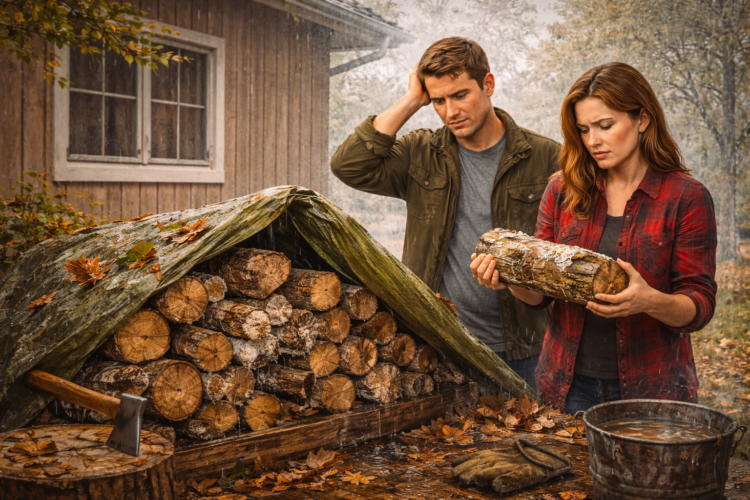
Firewood is one of the oldest and most reliable heating fuels used in homes around the world. Millions of households rely on fireplaces, wood stoves, and outdoor heaters during colder months. However, many people learn the hard way that storing firewood for months does not automatically make it ready to burn.
A surprisingly common mistake—improper storage—can leave logs damp, inefficient, and nearly useless even after long storage periods. Experts say that moisture content, ventilation, and stacking methods determine whether firewood becomes high-quality fuel or a smoky, low-heat disappointment.

Understanding how firewood dries and how small storage errors affect it can save homeowners money, improve heating efficiency, and reduce air pollution.
Understanding Why Firewood Must Be Properly Dried
Freshly cut wood contains a large amount of water. In some cases, freshly cut logs can contain up to 100% moisture content relative to dry wood weight, meaning a significant portion of the log is water. This water must evaporate through a process called seasoning, which allows wood to dry naturally before it is burned.
If the wood is burned before drying sufficiently, much of the fire’s energy goes into evaporating water instead of producing heat. For efficient burning, experts recommend firewood reach a moisture content below 20%, which allows logs to burn hotter and cleaner with less smoke.

However, even if firewood is stored for months, improper storage conditions can keep moisture trapped inside the logs.
The Simple Storage Mistake That Ruins Firewood
One of the most common mistakes homeowners make is stacking firewood directly on the ground or in poorly ventilated piles. When logs sit directly on soil, grass, or damp surfaces, they absorb moisture from the ground. This prevents proper drying and may even re-wet wood that had previously begun to season.
Similarly, tightly packed stacks with no airflow trap humidity between logs. Without airflow, evaporation slows dramatically.
The Result

The wood remains damp even after months of storage, causing:
- Low heat output
- Excess smoke
- Hard ignition
- Creosote buildup in chimneys
- Increased pollution
In many cases, people assume the wood itself is poor quality when the real problem is how it was stored.
Key Firewood Moisture Levels and Effects
| Moisture Content | Firewood Condition | Burning Performance |
|---|---|---|
| 50–100% | Freshly cut wood | Very poor burning, heavy smoke |
| 25–40% | Partially seasoned | Weak heat, difficult ignition |
| 15–20% | Properly seasoned | Efficient burning and strong heat |
| Below 15% | Very dry wood | Burns quickly but efficiently |
Logs should ideally stay between 15% and 20% moisture for optimal burning performance.
Why Wet Firewood Performs So Poorly
Burning wet or improperly stored firewood creates several problems.
1. Reduced Heat Output
Wet wood wastes energy boiling off moisture before producing heat.
2. Excess Smoke and Pollution
High moisture levels cause incomplete combustion, releasing more smoke particles and pollutants.
3. Dangerous Chimney Deposits
Burning damp wood produces creosote, a sticky substance that accumulates in chimneys and increases fire risk.
4. Faster Mold and Rot
Poor storage conditions can attract mold, insects, and decay organisms that degrade the wood.
How Long Firewood Actually Takes to Season
Many people assume that storing logs for a few months is enough. In reality, the seasoning process usually takes longer.
Typical seasoning times include:
- Softwood: 6–12 months
- Hardwood: 12–24 months
- Dense hardwoods: sometimes longer
Air-drying wood outdoors under proper conditions can reduce moisture to around 20% after roughly 12 months of storage depending on climate and wood type. Without proper airflow and elevation, however, the drying process can stall completely.
Correct Firewood Storage Method
Experts recommend several simple practices to keep firewood dry and usable.
Elevate the Stack
Place logs on pallets, racks, or bricks to prevent moisture absorption from soil.
Allow Air Circulation
Stack wood loosely with small gaps between logs so air can move through the pile.
Cover the Top Only
Protect the wood from rain using a tarp or roof, but leave the sides open for ventilation.
Choose a Sunny Location
Sun and wind help speed up the drying process.
Split Logs Early
Split wood dries faster than whole logs because more surface area is exposed to air. These steps ensure the wood dries properly and stays below the critical 20% moisture threshold needed for efficient burning.
Signs That Firewood Is Properly Seasoned
Homeowners can check whether their firewood is ready to burn using simple visual and physical tests.
Look for these indicators:
- Cracks or splits at the ends of logs
- Loose or peeling bark
- Lighter weight compared to fresh wood
- Hollow sound when two pieces are knocked together
For the most accurate measurement, a moisture meter can test the internal moisture content of the log.
Future Outlook: Why Proper Firewood Storage Matters More Than Ever
Interest in wood heating is rising again as households search for alternatives to expensive electricity and gas. However, environmental regulations in many countries are tightening because burning wet wood increases air pollution. Using properly seasoned wood can reduce harmful emissions by around 50% compared with damp wood, making storage practices more important than ever.
In the future, improved storage systems, kiln-dried logs, and moisture-testing tools will likely become more common as homeowners prioritize efficiency and environmental responsibility.
Conclusion
Many people assume that simply stacking firewood for a few months prepares it for burning. In reality, poor storage practices can leave logs damp and ineffective even after long periods. The most common mistake—placing wood directly on the ground or stacking it without airflow—prevents proper drying and traps moisture inside the logs.
To ensure firewood burns efficiently, it must reach a moisture level below 20% and be stored off the ground with good ventilation and weather protection. By following these simple steps, homeowners can transform ordinary firewood into a powerful, reliable heating source instead of a smoky frustration.
FAQs
How long should firewood be stored before burning?
Most firewood needs 6–12 months of seasoning, while dense hardwoods may require up to two years depending on climate and storage conditions.
What moisture level is best for firewood?
The ideal moisture content is 15–20%, which allows wood to burn efficiently and produce strong heat.
Can wet firewood damage a chimney?
Yes. Burning damp wood creates creosote buildup inside chimneys, increasing the risk of dangerous chimney fires.