
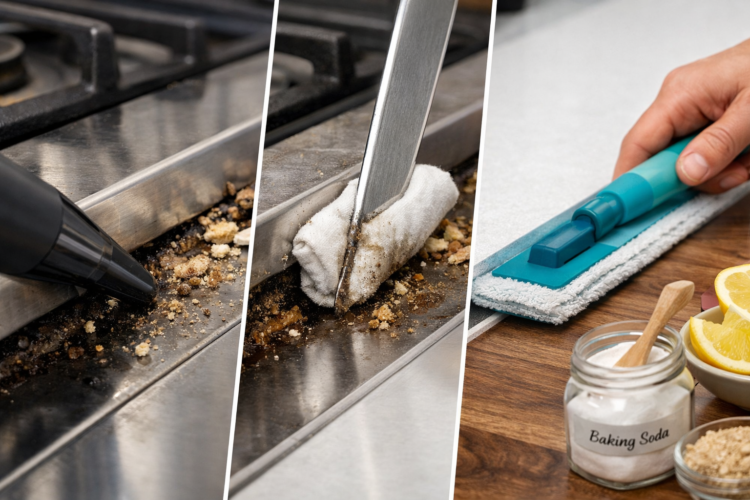
Clean the Gap Between Your Stove and Counter to eliminate hidden crumbs, grease buildup, and bacteria that accumulate in this narrow kitchen space over time. Keeping this small area clean is essential for maintaining overall kitchen hygiene, preventing pests, and avoiding unpleasant odors.
If this space is ignored, food particles, cooking oil, and spilled sauces can accumulate quickly, turning the gap into one of the dirtiest hidden spots in the kitchen. Regular cleaning and preventive solutions can keep this area spotless and ensure your cooking space remains sanitary.
Why The Stove-Counter Gap Gets So Dirty

The narrow crack between the stove and countertop is a natural trap for debris during cooking. When food falls or grease splashes while frying or sautéing, gravity pulls it directly into this space.
Common Debris Found In The Gap
- Food crumbs and seasoning particles
- Cooking oil and grease splatter
- Sauce drips and liquid spills
- Dust and hair
- Burnt food residue
Because the gap is rarely visible, many households clean it only during deep kitchen cleaning. However, regular cleaning of cooking equipment and surfaces is recommended daily to maintain hygiene and prevent contamination.
Step-By-Step Method To Clean The Gap Between Your Stove And Counter
1. Vacuum Loose Debris First
Start by removing crumbs and dust before wiping the area. Use a handheld vacuum with a narrow attachment and run it through the gap for about two to four minutes to suction out loose debris.

This step prevents pushing crumbs deeper into the crack while cleaning.
2. Use A Thin Tool To Dislodge Stuck Debris
If crumbs are stuck in the gap, use a slim tool such as:
- Butter knife
- Old credit card
- Plastic spatula
Gently scrape debris toward you and wipe it away with a microfiber cloth or sponge. For extremely narrow spaces, wrapping the tool with a damp cloth helps pull out sticky residue.
3. Deep Clean With A Microfiber Mop Or Cloth

Once crumbs are removed, wipe both sides of the gap.
Steps:
- Wet a microfiber mop or cloth with hot water.
- Add mild cleaner or a vinegar-water mixture.
- Slide it between the stove and counter.
- Wipe both sides thoroughly.
This removes grease buildup and sticky residues effectively.
4. Pull The Stove Out For A Deep Clean
Sometimes liquids or grease drip underneath the appliance. In such cases, move the stove forward.
Before doing this:
- Turn off electricity or gas connection.
- Place cardboard or plywood to protect the floor.
- Clean the sides of the stove and the floor underneath with a grease-cutting cleaner.
This step is usually necessary only during monthly or quarterly deep cleaning.
Best Tools And Cleaning Materials For This Task
Using the right tools can make the job much easier.
| Cleaning Tool | Purpose | Benefit |
|---|---|---|
| Handheld Vacuum | Removes loose crumbs and dust | Prevents debris buildup |
| Butter Knife / Credit Card | Scrapes debris from narrow spaces | Safe for tight gaps |
| Microfiber Cloth | Wipes grease and residue | Highly absorbent |
| Flat-Head Mop | Cleans both sides of the gap | Ideal for narrow areas |
| Degreasing Spray | Breaks down oil and grease | Removes stubborn stains |
| Vinegar + Water Solution | Natural cleaner | Safe and eco-friendly |
Natural Cleaning Solutions That Work Best
Many households prefer natural cleaners for kitchen maintenance.
Popular DIY Cleaning Solutions
1. Vinegar And Water
Cuts grease and removes odors effectively.
2. Baking Soda Paste
Useful for stubborn stains or sticky spills.
3. Lemon Water
Helps dissolve grease and adds freshness.
Natural cleaners such as baking soda, vinegar, and lemon are widely recommended for routine kitchen cleaning because they remove stains without harsh chemicals.
How To Prevent Grime From Falling Into The Gap
Cleaning is important, but prevention saves time.
Install Stove Gap Covers
A modern solution is silicone stove gap covers that seal the space between the stove and counter. These flexible strips prevent crumbs, grease, and spills from entering the gap.
Most covers:
- Range from 21 to 30 inches in length
- Can be trimmed for custom fitting
- Cost around $10–$20
This simple accessory dramatically reduces cleaning time.
Maintain A Weekly Cleaning Routine
A regular schedule prevents buildup.
| Cleaning Task | Frequency |
|---|---|
| Wipe stovetop and counter | Daily |
| Clean stove-counter gap | Weekly |
| Deep clean behind stove | Monthly |
| Inspect for grease buildup | Quarterly |
Regular cleaning helps maintain hygiene and prevents bacteria or pests from spreading in the kitchen environment.
Future Kitchen Cleaning Trends
With modern kitchen designs and smart appliances, cleaning innovations are evolving. Future solutions may include:
- Self-cleaning stovetops with sealed edges
- Magnetic or adjustable stove gap covers
- Antibacterial countertop materials
- Smart sensors that detect grease buildup
These advancements aim to reduce hidden dirt zones and improve kitchen hygiene.
Conclusion
The gap between your stove and countertop may seem insignificant, but it is one of the dirtiest hidden areas in the kitchen. Crumbs, grease, and spilled food quickly accumulate in this space, creating unpleasant odors and hygiene risks.
By following simple steps—vacuuming debris, scraping residue, wiping with microfiber tools, and performing periodic deep cleaning—you can keep this area spotless. Installing stove gap covers and maintaining a weekly cleaning routine ensures the space stays grime-free for the long term.
With the right tools, habits, and preventive solutions, keeping this overlooked kitchen spot clean becomes quick, easy, and stress-free.
FAQs
How Often Should You Clean The Gap Between Your Stove And Counter?
Ideally, you should clean it once every week and perform a deeper clean behind the stove once a month.
What Is The Easiest Way To Remove Crumbs From The Gap?
Using a handheld vacuum with a narrow attachment is the fastest and easiest method.
Are Stove Gap Covers Worth It?
Yes. Silicone gap covers prevent food, grease, and dust from falling into the gap, reducing cleaning time significantly.