
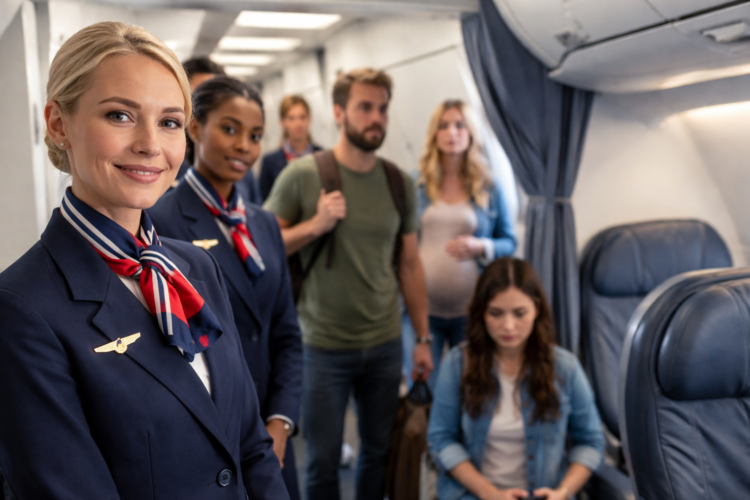
The moment you step onto an aircraft, flight attendants begin quietly observing passengers. While many travelers assume the greeting at the cabin door is just polite customer service, it is actually part of a quick safety assessment process carried out by trained cabin crew.
These professionals evaluate passengers within seconds to identify potential safety risks, medical concerns, and individuals who could help in an emergency. Modern aviation safety protocols require cabin crew to monitor passenger behavior, appearance, and readiness during boarding. This silent evaluation helps ensure flight safety, efficient boarding, and emergency preparedness.

What most passengers don’t realize is that small details—like the shoes you wear or how you greet the crew—can reveal more than you think. In this article, we explore what flight attendants notice the second you board, why those observations matter, and how these small details impact safety on modern flights.
Why Flight Attendants Observe Passengers During Boarding
Boarding is one of the most critical phases of any flight. During this time, flight attendants perform a rapid behavioral and safety scan of every passenger entering the aircraft.
This process helps the crew identify:
- Passengers who may be intoxicated or impaired
- Travelers who may require medical assistance
- Individuals capable of helping in emergencies
- Passengers who could potentially cause security or safety issues

Aviation safety guidelines emphasize that crew members must identify intoxicated or impaired passengers, because unpredictable behavior can pose risks to flight operations. In many cases, if a passenger appears intoxicated or disruptive, airlines may deny boarding or remove them from the flight to maintain safety.
Small Details Flight Attendants Instantly Notice
Below are some of the key things flight attendants observe within seconds of boarding.
1. Passenger Behavior And Body Language
Your body language tells the crew a lot about your state of mind.

Flight attendants often look for signs that a passenger is:
- Anxious or extremely nervous
- Angry or aggressive
- Confused or disoriented
- Calm and cooperative
These cues help cabin crew determine whether someone may require assistance or could become disruptive during the flight. Passengers who appear hostile or unusually stressed are often monitored more closely during the journey.
2. Signs Of Intoxication Or Drug Use
One of the most important checks during boarding is identifying intoxicated passengers. Alcohol-related incidents are a common cause of air rage, which can lead to flight diversions or safety threats.
Signs flight attendants look for include:
- Slurred speech
- Unsteady walking
- Strong smell of alcohol
- Aggressive or loud behavior
Aviation regulations prohibit airlines from transporting passengers who appear intoxicated because such behavior can threaten onboard safety.
3. Physical Fitness And Able-Bodied Passengers
Flight attendants also identify able-bodied passengers (ABPs) who could assist during an emergency evacuation.
In emergency situations, these passengers may help:
- Open exit doors
- Assist other travelers
- Direct people to evacuation slides
Crew members often note where physically capable passengers are seated so they can request help if necessary.
4. Passenger Health Condition
Cabin crew also scan passengers for visible medical concerns.
For example, they may notice if someone appears:
- Ill or weak
- Extremely tired
- Injured
- Pregnant or requiring assistance
Identifying these passengers early allows the crew to provide help or alert medical staff if necessary.
5. Shoes And Clothing
Believe it or not, your shoes can reveal important safety information. Flight attendants often notice footwear because certain types—such as high heels or loose sandals—may make emergency evacuations more difficult.
In an emergency, passengers must be able to move quickly and safely down evacuation slides, so crew members mentally note individuals who may struggle.
6. Carry-On Luggage Size
Another thing cabin crew notice instantly is how much luggage passengers bring onboard.
They check for:
- Oversized carry-on bags
- Items that may not fit overhead bins
- Potentially restricted items
If luggage doesn’t meet cabin requirements, it may be tagged and placed in the cargo hold to avoid blocking aisles or emergency exits.
7. Passenger Attitude Toward The Crew
Your first interaction with the cabin crew is also a subtle indicator of behavior.
Flight attendants often notice:
- Whether you make eye contact
- Whether you return the greeting
- Your tone when speaking
Passengers who acknowledge the crew are generally seen as cooperative and calm travelers, while those who appear dismissive or rude may be watched more carefully.
Quick Overview Table: What Flight Attendants Notice
| Detail Observed | Why It Matters | Safety Impact |
|---|---|---|
| Passenger behavior | Detects stress or aggression | Prevents onboard conflicts |
| Signs of intoxication | Identifies impaired travelers | Avoids safety risks |
| Physical strength | Finds able-bodied helpers | Helps during evacuations |
| Health condition | Detects medical concerns | Enables early assistance |
| Shoes and clothing | Evaluates mobility | Faster emergency evacuation |
| Carry-on baggage | Ensures compliance with rules | Keeps aisles clear |
| Passenger attitude | Predicts cooperation | Helps maintain order |
The Hidden Safety Role Of Cabin Crew
Many travelers see flight attendants primarily as service professionals, but their main role is ensuring passenger safety.
Their responsibilities include:
- Monitoring passenger behavior
- Enforcing safety regulations
- Performing safety demonstrations
- Managing emergencies and evacuations
Airlines require pre-flight safety briefings before takeoff to ensure passengers understand emergency procedures and safety equipment. This makes the boarding observation process a crucial first step in maintaining cabin safety.
Future Of Passenger Safety Monitoring
With advances in aviation technology, passenger monitoring may become even more advanced.
Future developments could include:
- AI-assisted cabin surveillance systems
- Behavioral analytics for passenger risk detection
- Enhanced crew training for identifying security threats
- Smart luggage scanning and boarding analytics
These innovations aim to improve aviation safety while making boarding more efficient.
Conclusion
The next time you board a plane, remember that flight attendants are doing far more than greeting you. In just a few seconds, they evaluate subtle details such as your behavior, health, luggage, and even your shoes. These observations help them identify safety risks, locate passengers who can assist in emergencies, and ensure the flight runs smoothly.
While most travelers never notice this silent assessment, it plays a vital role in modern aviation safety and passenger protection. Understanding what cabin crew observe during boarding can also help passengers become more mindful travelers—making flights safer and more comfortable for everyone onboard.
FAQs
Why do flight attendants greet passengers at the door?
Flight attendants greet passengers not only for hospitality but also to quickly assess safety risks, health conditions, and behavior during boarding.
Can flight attendants refuse boarding to a passenger?
Yes. Airlines can refuse boarding if a passenger appears intoxicated, aggressive, or medically unfit to travel, as this could threaten flight safety.
Why do flight attendants notice strong or fit passengers?
Crew members sometimes identify able-bodied passengers who could help open exits or assist others during an emergency evacuation.