
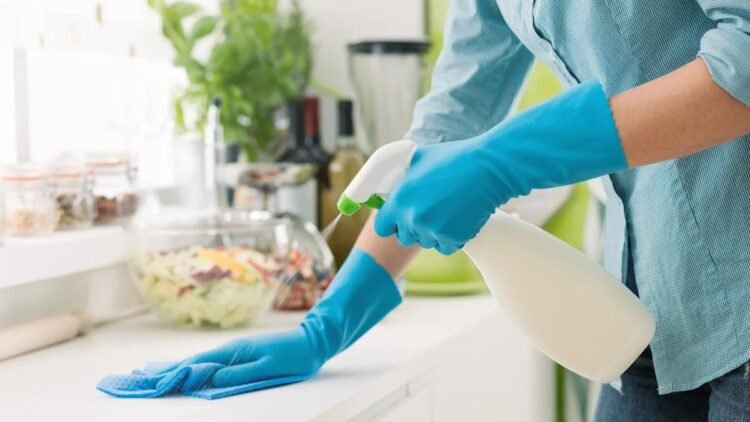
Hydrogen peroxide is a common household product usually stored in bathroom medicine cabinets for first aid. However, this powerful disinfectant is also extremely useful for cleaning and sanitizing the kitchen.
Because it acts as a mild bleaching agent and naturally breaks down into water and oxygen, it leaves no harmful residue behind. This makes hydrogen peroxide a safe and practical addition to your everyday kitchen cleaning routine.

Using hydrogen peroxide properly can help eliminate bacteria, remove stubborn stains, and keep kitchen surfaces hygienic with minimal effort.
Why Hydrogen Peroxide Is Effective for Kitchen Cleaning
Hydrogen peroxide works as both an antiseptic and an oxidizing agent. As an antiseptic, it destroys germs and bacteria found on hard surfaces. At the same time, its oxidizing properties help break down tough stains and grime that can accumulate during everyday cooking.
Another benefit is that hydrogen peroxide contains simple natural components. When exposed to light and air, it eventually decomposes into plain water and oxygen, making it environmentally friendly compared to many chemical cleaners.
Kitchen Areas You Can Clean with Hydrogen Peroxide

Hydrogen peroxide can be used safely on many common kitchen surfaces and items, including:
- Kitchen countertops of various materials
- Cabinet handles, drawer pulls, and doorknobs
- Appliance handles and touchscreens
- Cooktops and stovetops
- Interiors of refrigerators and freezers
- Dishwashers
- Kitchen sinks
- Dishes and cookware
- Cutting boards
- Kitchen floors
- Garbage bins and trash cans
This wide range of uses makes hydrogen peroxide a versatile solution for maintaining kitchen hygiene.
Choosing the Right Hydrogen Peroxide Solution
For kitchen cleaning, the standard 3% hydrogen peroxide solution commonly sold in pharmacies works perfectly.

Fresh hydrogen peroxide is most effective. Once opened, the bottle usually maintains disinfecting power for around six months, while an unopened bottle can last up to one year.
How to Check If It’s Still Effective
To test whether your hydrogen peroxide still works:
- Pour a small amount into a glass bowl.
- Observe the reaction.
If the liquid produces fizzing bubbles, it is still active and effective for disinfecting. If no fizz appears, it is best to replace the bottle.
Cleaning Countertops, Hardware, and Appliances
Hydrogen peroxide is excellent for sanitizing everyday kitchen surfaces.
Step-by-step method
1. Attach a spray nozzle
Hydrogen peroxide is sold in dark bottles because it is sensitive to light. Simply attach a spray nozzle to make application easier.
2. Spray the surface
Lightly mist the area you want to clean.
3. Let it sit
Allow the solution to remain on the surface for 5 to 7 minutes so it can break down bacteria and grime.
4. Wipe dry
Use a clean microfiber cloth to wipe the surface.
Removing Stubborn Sink and Countertop Grime
For tougher stains and buildup, hydrogen peroxide works best when combined with baking soda.
Cleaning method
- Spray hydrogen peroxide lightly onto the dirty surface.
- Sprinkle dry baking soda over the sprayed area.
- Scrub using a sponge or microfiber cloth.
- Rinse thoroughly with water.
Baking soda acts as a gentle abrasive, helping remove stuck-on dirt without damaging surfaces.
Cleaning Floors and Deodorizing Garbage Cans
Hydrogen peroxide can also be used as a cleaning solution for floors and trash bins.
Prepare the solution
Mix:
- 1 part hydrogen peroxide
- 1 part water
How to use it
Mopping floors
Use a microfiber mop with the mixture to clean floors. There is no need to rinse afterward. However, avoid leaving standing liquid on laminate or LVT flooring. Allow the floor to air dry.
Freshening garbage cans
Use the same solution to rinse out garbage cans and remove unpleasant odors.
Sanitizing Cutting Boards, Dishes, and Cookware
Hydrogen peroxide is also effective for disinfecting food preparation tools.
Cutting boards
Spray the board lightly with hydrogen peroxide, including wooden boards. Let it sit for 10 minutes, then rinse thoroughly with water. Allow the board to air dry or dry it with a clean microfiber cloth.
Cookware
Spray cookware with hydrogen peroxide and sprinkle baking soda on top to loosen burnt or stuck food. Scrub gently with a sponge and rinse well.
Dishes
Wash dishes first to remove food residue. Afterward, spray them with hydrogen peroxide and let them sit for 10 minutes before rinsing.
Hydrogen peroxide is a simple yet powerful cleaning solution that can help keep your kitchen hygienic and fresh. Its ability to disinfect surfaces, break down stubborn stains, and leave no chemical residue makes it a reliable alternative to many commercial cleaners.
From countertops and appliances to cutting boards and garbage bins, this affordable product can handle a wide variety of kitchen cleaning tasks. When used correctly, hydrogen peroxide can make maintaining a clean and safe kitchen easier and more efficient.
FAQs
1. Is hydrogen peroxide safe for kitchen cleaning?
Yes, the standard 3% solution is safe for disinfecting most kitchen surfaces when used properly.
2. Can hydrogen peroxide remove stains from countertops?
Yes, its oxidizing properties help break down tough stains and grime.
3. How long should hydrogen peroxide sit on surfaces to disinfect them?
Typically, it should remain on surfaces for 5 to 10 minutes for effective sanitization.
4. Can hydrogen peroxide be mixed with other cleaners?
It should not be mixed with vinegar or bleach. However, it can safely be used with baking soda.