


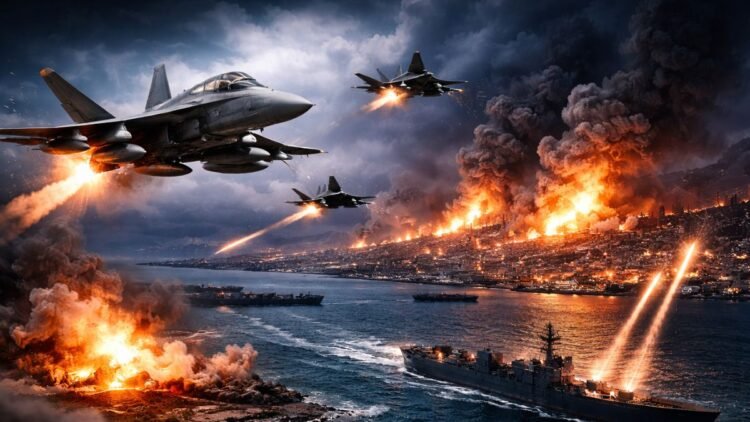
Tensions in the Middle East have escalated sharply as the United States launched what officials described as the “most intense day of strikes” against Iran, while Tehran responded with threats to block global oil shipments through the Strait of Hormuz. The conflict has drawn international attention due to its potential impact on global energy markets, regional stability, and geopolitical alliances.
Recent developments show a rapidly evolving situation involving military actions, diplomatic tensions, and humanitarian concerns across multiple countries in the region.
U.S. Intensifies Military Operations Against Iran
U.S. Defense Secretary Pete Hegseth confirmed that the latest round of attacks represents the most intense phase of American strikes on Iranian targets so far. These strikes are part of ongoing military operations targeting facilities believed to be connected to Iran’s strategic capabilities.
While the United States increased its attacks, Iran launched its own wave of retaliatory strikes, targeting areas linked to Israel and strategic locations in the Persian Gulf. The exchange of attacks has raised fears of a broader regional conflict.
Military analysts warn that continued escalation could draw additional countries into the confrontation and increase instability across the Middle East.
Iran Threatens to Block Oil Exports Through Strait of Hormuz
One of the most serious threats from Tehran involves the possible blockade of the Strait of Hormuz, one of the world’s most important oil shipping routes.
Iranian officials warned that “not one liter of oil” would leave the Middle East if U.S. and Israeli military strikes continue. The Strait of Hormuz is critical to global energy supply, with a significant portion of the world’s oil shipments passing through the narrow waterway each day.
Former U.S. President Donald Trump responded with strong warnings, saying Iran would face “death, fire and fury” if it attempted to block the route.
The tension caused oil prices to spike before stabilizing, highlighting how sensitive global markets are to developments in the region.
Trump Sends Mixed Signals on Duration of Conflict
In recent remarks, Donald Trump offered contradictory messages about how long the conflict might last.
At one point, he described the military operation as a “little excursion” that could end soon. However, he also acknowledged that while the United States had “won in many ways,” the conflict had not yet reached a full resolution.
These mixed signals have left analysts uncertain about Washington’s long-term strategy and whether further escalation may occur.
Controversy Over Strike Near Iranian School
A newly surfaced video circulating online appears to show a Tomahawk missile strike hitting an area near a school in Iran, reportedly causing significant civilian casualties.
Experts reviewing the footage say the missile resembles an American-made Tomahawk, although officials continue to dispute responsibility for the attack.
Reports suggest more than 170 people were killed in the incident, including many children. The situation has sparked international concern and calls for independent investigations into the strike.
Rising Death Toll Across the Middle East
The ongoing conflict has resulted in significant casualties across multiple countries in the region.
According to the Iranian Red Crescent Society, more than 1,200 people have been killed in Iran due to Israeli and U.S. strikes. Meanwhile, 13 people in Israel have reportedly died following retaliatory attacks launched by Iran.
In neighboring Lebanon, Israeli strikes targeting Hezbollah positions have caused widespread destruction in Beirut’s southern suburbs, particularly in the Dahiyeh district. Rescue crews continue to clear rubble while emergency services respond to the aftermath.
Iran Women’s Soccer Players Seek Safety in Australia
In a separate development tied to the wider conflict, several members of the Iranian women’s national soccer team have sought safety overseas.
Six players were granted humanitarian visas in Australia, allowing them to remain in the country amid concerns about their safety if they returned to Iran. However, one player reportedly reversed her decision and returned home after contacting teammates and officials.
Australian authorities confirmed the remaining players were relocated to a secure location for safety after their asylum status became widely known.
Analysts Say Russia Could Benefit from the Conflict
Some international leaders believe the conflict may have unintended geopolitical consequences.
European Council President António Costa suggested that Russia may emerge as a major beneficiary, particularly because rising oil prices could increase revenue for the Russian economy.
Costa also warned that global attention shifting toward the Middle East could reduce focus on the ongoing war in Ukraine, potentially benefiting Moscow’s strategic position.
Conclusion
The escalating confrontation between the United States and Iran has triggered widespread concern across the international community. With military strikes intensifying, threats to global oil supplies, and rising civilian casualties, the situation remains highly volatile.
As global powers monitor the conflict closely, diplomatic efforts may become increasingly important to prevent further escalation and stabilize the region. The coming weeks will likely determine whether the crisis expands into a larger regional conflict or moves toward negotiation and de-escalation.
FAQs
Why is the Strait of Hormuz important in this conflict?
The Strait of Hormuz is one of the world’s most vital oil shipping routes, carrying a large percentage of global oil supplies. Any blockade could disrupt global energy markets.
How many people have died in the recent Middle East conflict?
Reports indicate over 1,200 people have been killed in Iran, while 13 deaths have been reported in Israel, along with hundreds of casualties in Lebanon.
Why are Iranian soccer players seeking asylum in Australia?
Some members of the Iranian women’s soccer team requested humanitarian visas due to concerns about safety and political tensions related to the ongoing conflict.