
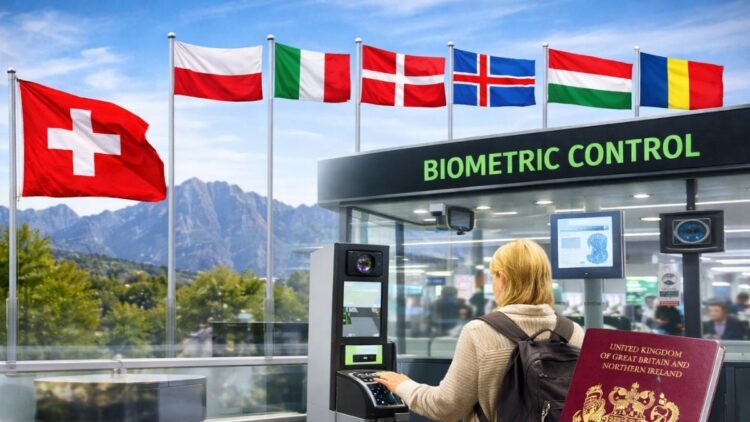
Travel across Europe is set to change significantly as the United Kingdom’s Foreign, Commonwealth & Development Office (FCDO) issues a new travel advisory ahead of major reforms to border security in the Schengen Area.
Starting April 2026, several European countries including Switzerland, Romania, Poland, Italy, Iceland, Hungary, and Denmark will introduce stricter travel regulations involving passport validity checks, biometric registration, and updated visa rules.

These changes are part of the European Union’s plan to modernize border management through the Entry-Exit System (EES), a new digital platform that will record the entry and exit of travelers entering Schengen countries. The new rules are designed to strengthen security, track visitors more efficiently, and simplify border procedures.
Travelers from the UK and other non-EU countries must now prepare for these updates to avoid disruptions while visiting Europe.
The Entry-Exit System (EES): A Major Border Control Reform
One of the most significant changes coming in April 2026 is the launch of the Schengen Entry-Exit System (EES).
What Is the EES?

The Entry-Exit System will replace traditional passport stamping with a digital system that records traveler movements. At border checkpoints, travelers will need to provide biometric information.
Biometric Data Collection
Under the new system, visitors entering Schengen countries will be required to provide:
- Fingerprints
- Facial photographs
- Biometric verification at entry points
This system will allow authorities to monitor entries and exits more accurately, helping to prevent visa overstays and improve border security.
New Passport and Visa Requirements

Alongside biometric checks, travelers will face stricter passport and visa regulations.
Passport Validity Rules
UK travelers must ensure their passports:
- Were issued within the last 10 years
- Are valid for at least three months beyond the departure date
Failure to meet these requirements may lead to denied entry at the border.
90-Day Visa-Free Limit
The Schengen Area continues to enforce the 90-day visa-free stay rule within a 180-day period for UK citizens and other non-EU travelers.
Visitors who wish to remain longer must apply for a long-term visa or residency permit before traveling.
Country-Specific Travel Updates
Switzerland
As a key member of the Schengen Area, Switzerland will fully implement the biometric registration system. Travelers will be required to submit fingerprints and photographs at border checkpoints starting in April 2026.
Romania
Although Romania is not yet fully integrated into the Schengen Area, it is strengthening its border control measures. The country is introducing enhanced passport checks and biometric registration to align with EU security standards.
Poland
Poland will play an important role in implementing the Entry-Exit System. Travelers entering Poland will undergo biometric scanning, and authorities will closely monitor visa-free stay limits.
Italy
Italy remains one of the most visited destinations for UK tourists. However, the country will adopt new biometric registration procedures and enforce stricter passport validity requirements at its borders.
Iceland
Despite its remote location, Iceland follows Schengen rules and will begin collecting biometric data such as fingerprints and facial images from travelers entering the country.
Hungary
Hungary is strengthening border security by introducing biometric checks and reinforcing passport validity rules in line with Schengen standards.
Denmark
Denmark is preparing for the EES rollout by introducing biometric registration at entry points. Authorities will also enforce strict security measures at airports and border crossings.
Why These Changes Are Being Introduced
The European Union is implementing these reforms to modernize border management and enhance security across the region.
Key Objectives
The main goals of the new system include:
- Improving border security
- Preventing illegal immigration and visa overstays
- Reducing wait times through digital border processing
- Tracking traveler movement more accurately
Authorities believe the system will make travel across Europe safer, more efficient, and more transparent.
How Travelers Should Prepare
Travelers planning to visit these countries in 2026 should prepare in advance.
Travel Preparation Tips
To avoid travel disruptions, travelers should:
- Check passport validity well before departure
- Be ready for biometric registration at the border
- Understand the Schengen 90-day stay rule
- Monitor official travel advisories from the UK government
Proper preparation will help travelers navigate the new system smoothly.
Conclusion
The upcoming Schengen biometric border system and passport reforms in April 2026 represent one of the biggest changes to European travel in recent years. Countries including Switzerland, Romania, Poland, Italy, Iceland, Hungary, and Denmark are preparing to implement these new security measures as part of the EU’s modernized border management strategy.
While these updates aim to improve security and streamline border procedures, travelers must stay informed and ensure their travel documents meet the new requirements. With proper preparation, visitors can continue to enjoy smooth travel experiences across Europe.
FAQs
What is the Schengen Entry-Exit System (EES)?
The Entry-Exit System is a new digital border control system that records travelers’ entry and exit using biometric data instead of passport stamps.
Will UK travelers need to provide biometric information?
Yes. From April 2026, travelers entering Schengen countries will need to provide fingerprints and facial photographs at border checkpoints.
How long can UK citizens stay in the Schengen Area without a visa?
UK citizens can stay up to 90 days within a 180-day period without a visa. Longer stays require a visa or residence permit.