


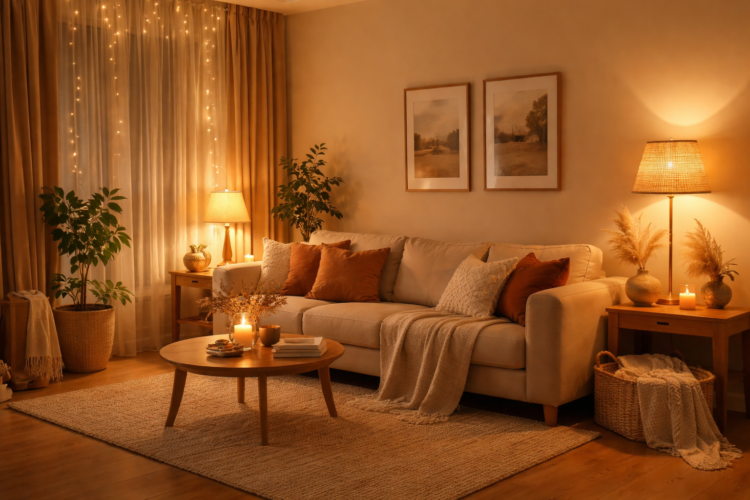
Small Lighting Adjustment can make a surprising difference in how warm and comfortable a room feels without increasing your heating costs. Many homeowners automatically turn up the thermostat during colder months, but interior design experts say that adjusting the color temperature of lighting is one of the easiest ways to create a cozy atmosphere.
A small lighting adjustment, such as switching to warm white bulbs between 2700K and 3000K, can transform the mood of a room instantly. Lighting temperature affects how humans perceive comfort, brightness, and warmth. Warm-toned lighting mimics candlelight and sunset hues, which psychologically signals relaxation and comfort to the brain.


Because modern LED lighting technology allows precise control of color temperature, homeowners can now create a warmer, more inviting space while still maintaining energy efficiency and lower electricity consumption.
Understanding Color Temperature And Why It Affects Warmth
What Is Color Temperature?
Color temperature refers to the visual warmth or coolness of light, measured in Kelvin (K). Lower Kelvin numbers produce yellowish tones that feel warmer, while higher Kelvin numbers emit bluish light that feels colder. Warm lighting has been shown to create relaxation and comfort, making it ideal for spaces where people unwind.
Why Lighting Influences How Warm A Room Feels
Even though lighting does not change the actual air temperature, it strongly affects psychological perception of warmth. Warm colors remind the brain of firelight and sunset tones, which humans associate with comfort and shelter. Research in lighting psychology shows that warm lighting:
- Encourages relaxation and calm
- Makes spaces appear more intimate
- Enhances natural textures and materials
- Reduces the sterile feeling of bright white lighting

In contrast, cool lighting is often used in offices or hospitals because it promotes alertness and concentration.
The Simple Lighting Adjustment That Changes Everything
The most effective adjustment is switching from cool white bulbs (4000K–5000K) to warm white bulbs (2700K–3000K). Interior lighting experts frequently recommend 2700K lighting for living rooms and bedrooms, because it produces a soft amber glow that mimics traditional incandescent bulbs and candlelight.
Even a difference of 1000 Kelvin, such as moving from 4000K to 3000K lighting, can significantly change how a room feels visually. This means a simple bulb replacement can transform a space from cold and sterile to cozy and inviting.
Lighting Temperature Comparison Table
| Lighting Type | Kelvin Range | Visual Effect | Best Room Use |
|---|---|---|---|
| Warm White | 2200K – 2700K | Amber, cozy glow | Bedrooms, living rooms |
| Soft Warm White | 2700K – 3000K | Relaxing and comfortable | Dining areas, lounges |
| Neutral White | 3500K – 4000K | Balanced brightness | Kitchens, bathrooms |
| Cool White | 4000K – 5000K | Crisp, clinical light | Offices, workshops |
| Daylight | 5000K – 6500K | Blue-white brightness | Garages, studios |

Warm light between 2700K and 3000K is widely considered ideal for creating a cozy home environment.
Additional Lighting Tricks That Increase Warmth
Switching bulbs is the biggest change, but designers also recommend several small adjustments to enhance warmth.
Use Layered Lighting
Relying on a single overhead light often makes rooms feel flat and cold. Interior designers recommend combining:
- Ceiling lights
- Table lamps
- Floor lamps
- Wall sconces
Layering light sources adds depth and softness to the room’s atmosphere.
Add Fabric Or Textured Lampshades
Materials such as linen, silk, or paper lampshades diffuse light and create a softer glow that spreads warmth throughout a space.
Install Dimmer Switches
Dimmer switches allow lighting to gradually shift from bright daylight to softer evening tones. Some bulbs are even designed to “dim to warm,” meaning they become warmer as the light level decreases.
Keep Color Temperature Consistent
Using different bulb temperatures in the same room can create visual imbalance. Consistency across lighting fixtures helps maintain a unified warm atmosphere.
Energy Efficiency And Cost Benefits
Modern LED bulbs with warm color temperatures offer both comfort and efficiency. Compared with traditional incandescent bulbs, LEDs:
- Use 75–80% less electricity
- Last 15–25 times longer
- Produce less excess heat
- Reduce electricity bills
This means switching to warm LED bulbs improves comfort without increasing energy consumption. Some smart lighting systems even allow homeowners to adjust color temperature automatically throughout the day, simulating natural sunlight patterns.
Future Trends In Warm Lighting Design
Lighting technology is rapidly evolving, and several innovations are making it easier to control indoor warmth through lighting.
Smart Adaptive Lighting
Smart home systems now allow bulbs to change from cool daylight in the morning to warm tones at night, supporting natural circadian rhythms.
Tunable White LED Technology
New LED fixtures allow users to adjust lighting anywhere between 2200K and 6500K, giving complete control over mood and ambiance.
Human-Centric Lighting
This emerging field studies how lighting affects human health, mood, and productivity. Warm lighting is increasingly used in homes to reduce stress and promote relaxation. As smart homes become more common, lighting adjustments will play a bigger role in both energy efficiency and indoor comfort.
Common Mistakes That Make Rooms Feel Colder
Many homes unintentionally create a cold atmosphere because of lighting choices.
Common mistakes include:
- Using cool white bulbs in living spaces
- Over-relying on bright overhead lighting
- Mixing different color temperatures
- Using exposed bulbs without shades
Correcting these issues often makes a room feel significantly warmer without changing heating settings.
Conclusion
A small lighting adjustment—switching to warm white bulbs between 2700K and 3000K—can dramatically change how warm a room feels without increasing heating costs.
This simple upgrade works because lighting strongly influences how humans perceive comfort and atmosphere. Warm lighting softens spaces, enhances natural textures, and creates a relaxing environment that cooler lighting cannot replicate.
When combined with layered lighting, dimmers, and energy-efficient LEDs, this strategy offers an affordable and sustainable way to transform any room into a cozy retreat. As smart lighting technology continues to evolve, homeowners will have even more ways to control warmth, comfort, and mood through light alone.
FAQs
What light color temperature makes a room feel warm?
Lighting between 2700K and 3000K creates the warmest and most comfortable atmosphere in homes.
Does warm lighting actually heat a room?
No. Warm lighting changes visual perception and mood, making a space feel cozier even though the temperature stays the same.
Are warm LED bulbs energy efficient?
Yes. Modern LED bulbs with warm color temperatures are highly energy efficient and can reduce electricity use by up to 80% compared to incandescent bulbs.