
Electric kettles are one of the most commonly used kitchen appliances, especially for preparing tea, coffee, instant noodles, or boiling water quickly. However, many people overlook an important aspect of kettle maintenance—cleaning an electric kettle regularly and performing proper descaling. Over time, minerals present in tap water, particularly calcium and magnesium, accumulate inside the kettle and form deposits known as limescale.
Cleaning an electric kettle properly not only improves hygiene but also increases the lifespan of the appliance and reduces energy consumption. This article explains the right way to clean an electric kettle, how often you should do it, and the most effective methods based on the latest cleaning recommendations.
Why Cleaning An Electric Kettle Is Important

Electric kettles may look clean from the outside, but mineral deposits gradually accumulate inside them. These deposits usually come from calcium and magnesium found in tap water, especially in areas with hard water.
If the kettle is not cleaned regularly, several problems can occur:
- Limescale buildup slows down the boiling process.
- Mineral deposits can increase electricity consumption because the heating element must work harder.
- It may affect the taste and smell of tea or coffee.
- In rare cases, stagnant water can allow bacteria or mold growth.
- Excess scale may damage the heating element or internal sensors.
Regular cleaning removes mineral deposits and keeps your kettle functioning efficiently.
How Often You Should Clean An Electric Kettle

The frequency of cleaning depends mainly on water hardness and usage frequency. Experts recommend cleaning your kettle regularly to prevent heavy mineral buildup.
Recommended Cleaning Frequency
| Condition | Recommended Cleaning Frequency |
|---|---|
| Hard water areas | Every 2 weeks |
| Moderate mineral content | Every 3–4 weeks |
| Soft water areas | Every 1–2 months |
| Deep descaling maintenance | 3–4 times per year |
In many households, cleaning the kettle once every month is considered an effective routine for preventing scale buildup. If you notice white chalky marks, slow boiling, or unusual taste, it is a sign the kettle needs cleaning immediately.
Common Signs Your Electric Kettle Needs Cleaning
You should clean your kettle if you notice:
- White or chalky deposits inside the kettle
- Water taking longer to boil
- Strange taste in beverages
- Kettle switching off before boiling
- Visible mineral flakes in water

These are typical indicators of limescale buildup.
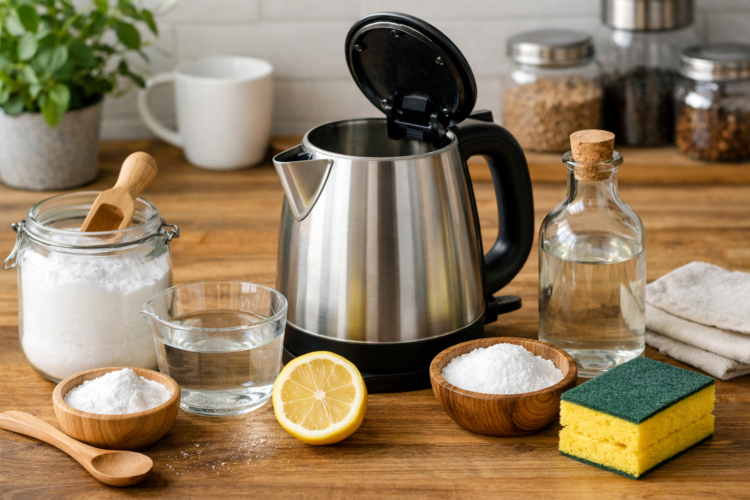
Materials You Need To Clean An Electric Kettle
Cleaning a kettle does not require expensive chemicals. Most effective methods use simple household items.
Common cleaning materials include:
- White vinegar
- Lemon juice
- Citric acid
- Baking soda
- Soft sponge or cloth
- Clean water
- Measuring cup
These natural cleaning solutions safely dissolve mineral buildup without damaging the appliance.
Step-By-Step Method To Clean An Electric Kettle
1. Unplug The Kettle
Before cleaning, always turn off and unplug the kettle to avoid electrical hazards.
2. Prepare A Cleaning Solution
The most widely recommended solution is:
- 1:1 mixture of white vinegar and water.
Alternatively, you can use citric acid or lemon juice mixed with water.
3. Boil The Solution
Fill the kettle with the mixture and bring it to a boil. The mild acidity helps break down limescale deposits.
4. Let The Solution Sit
After boiling, turn off the kettle and allow the mixture to sit for 20–30 minutes to dissolve stubborn deposits.
5. Empty And Rinse
Discard the solution and rinse the kettle thoroughly.
6. Boil Clean Water
Fill the kettle with fresh water and boil it once or twice to remove any remaining vinegar taste.
7. Wipe The Exterior
Use a soft cloth or sponge to clean the outside of the kettle. This simple cleaning process usually takes less than 30 minutes.
Alternative Natural Cleaning Methods
Besides vinegar, several other natural cleaning techniques are effective.
Lemon Juice Method
- Mix equal parts lemon juice and water.
- Boil the mixture in the kettle.
- Let it sit for 30 minutes before rinsing.
Lemon juice leaves a fresh smell and removes scale naturally.
Citric Acid Method
- Add 1–2 tablespoons of citric acid to water.
- Boil the solution and leave it for 20 minutes.
- Rinse thoroughly.
Citric acid is often considered stronger than vinegar and odor-free.
Baking Soda Method
For stubborn stains, baking soda can be used as a gentle scrubbing solution.
Tips To Prevent Limescale Buildup
Prevention reduces the need for frequent deep cleaning.
Practical tips include:
- Empty leftover water after use.
- Avoid leaving water inside the kettle overnight.
- Use filtered or distilled water when possible.
- Rinse the kettle regularly.
- Perform monthly descaling maintenance.
These small habits can significantly extend the life of your kettle.
Important Safety Tips
When cleaning an electric kettle, remember:
- Never immerse the base or power cord in water.
- Avoid abrasive brushes that could damage sensors.
- Always rinse thoroughly before using the kettle again.
- Follow the manufacturer’s cleaning instructions when available.
Conclusion
Keeping your electric kettle clean is essential for better performance, hygiene, and energy efficiency. Mineral deposits from everyday water use can gradually build up inside the appliance, affecting both taste and boiling speed.
By cleaning your kettle every few weeks or at least once a month, you can prevent limescale buildup and extend the appliance’s lifespan. Simple household ingredients like vinegar, lemon juice, or citric acid provide safe and effective cleaning solutions.
Regular maintenance ensures your kettle delivers clean, fresh-tasting water every time while saving electricity and protecting the internal heating element. Making kettle cleaning part of your routine kitchen care can significantly improve both appliance efficiency and beverage quality.
FAQs
Can Vinegar Damage An Electric Kettle?
No. Diluted white vinegar is generally safe and effective for removing mineral buildup because its mild acidity dissolves limescale without damaging most kettle materials.
Why Does Limescale Form Inside A Kettle?
Limescale forms due to minerals such as calcium and magnesium present in tap water, especially in areas with hard water.
Can A Dirty Kettle Increase Electricity Usage?
Yes. Even a thin layer of limescale can insulate the heating element, making it work harder and increasing energy consumption.