
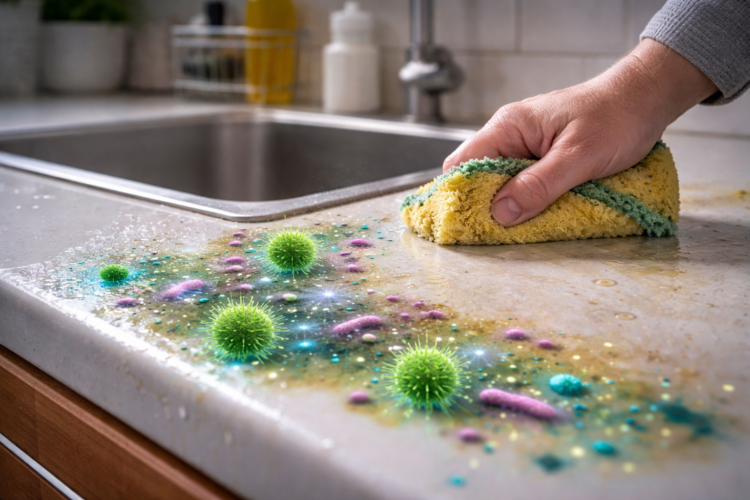
Most people assume that kitchen surface, cutting boards, or sinks are the dirtiest places in the kitchen. Surprisingly, research consistently shows that the kitchen sponge is often the most contaminated surface in the entire kitchen. Its porous structure, constant moisture, and exposure to food residues create the perfect environment for bacteria to multiply rapidly.
Scientists have discovered that a single kitchen sponge can harbor millions to billions of bacteria, including harmful pathogens such as E. coli, Salmonella, and Staphylococcus. Because the sponge is frequently used to clean dishes and surfaces, it can easily spread microbes across the kitchen, increasing the risk of food contamination and illness.

This article explains why kitchen sponges are such powerful bacterial breeding grounds, how quickly microbes spread from them, and what households can do to reduce the risk.
Why The Kitchen Sponge Is The Fastest Spreading Bacteria Surface
A kitchen sponge may look harmless, but its design makes it ideal for microbial growth. Several factors contribute to this problem.
1. Porous Structure
Sponges contain thousands of microscopic holes that trap food particles and moisture. These pores create tiny environments where bacteria can live, reproduce, and survive for long periods. Research analyzing used kitchen sponges found hundreds of bacterial species living inside them, forming complex microbial communities.
2. Constant Moisture

Bacteria thrive in damp conditions. Because sponges are frequently wet and rarely fully dry, they provide ideal conditions for microbial growth. Scientists found that Salmonella and other bacteria survive better in sponges than in brushes because sponges stay moist longer.
3. Food Residue
Every time dishes or countertops are wiped, small food particles remain inside the sponge. These residues act as nutrients, allowing bacteria to multiply rapidly.
4. Frequent Contact With Surfaces
Sponges touch many areas of the kitchen—plates, cutting boards, sinks, countertops, and sometimes even hands. This allows bacteria to spread quickly from one surface to another, causing cross-contamination.
Shocking Bacteria Numbers Found In Kitchen Sponges

Scientific studies have measured the bacterial load of common kitchen items, revealing startling numbers.
- A single square centimeter of sponge can contain billions of bacteria.
- Some studies found over 7.9 million bacteria on a single sponge after routine use.
- In certain households, sponges showed contamination with E. coli, Salmonella, and antibiotic-resistant bacteria.
- Bacteria such as E. coli, Salmonella, and Staphylococcus can survive up to 16 days on a sponge.
These figures show why microbiologists often describe the kitchen sponge as a major microbial hotspot in homes.
Comparison Of Bacteria On Different Kitchen Surfaces
| Kitchen Surface | Average Bacteria Count | Risk Level |
|---|---|---|
| Kitchen Sponge | Millions to billions of bacteria | Very High |
| Kitchen Sink | About 32,000 bacteria per 25 cm² | High |
| Countertop | Around 316 bacteria per 25 cm² | Moderate |
| Refrigerator Handle | Around 100 bacteria per 25 cm² | Low |
| Toilet Seat (for comparison) | Similar to countertops | Moderate |
Research shows that kitchen sponges contain far more bacteria than most other household surfaces, including areas people assume are dirtier.
How Bacteria Spread From Sponges To Food
The biggest concern with contaminated sponges is cross-contamination.
Surface Transfer
When a sponge wipes a countertop after cleaning raw meat juices, bacteria can transfer to other surfaces such as cutting boards or utensils.
Food Contact
Even a clean-looking plate may become contaminated if wiped with a bacteria-laden sponge.
Hand Transmission
People often squeeze sponges with bare hands. Bacteria can move from the sponge to hands and then onto food.
Studies have demonstrated that microorganisms can easily transfer from sponges to surfaces such as stainless steel and plastic, allowing them to survive and spread further.
Other High-Risk Kitchen Surfaces
While sponges rank highest, several other kitchen surfaces also accumulate bacteria quickly.
Cutting Boards
Cutting boards frequently contact raw meat and vegetables. Bacteria on a cutting board can double within 10 minutes of use. Grooves from knife cuts can trap microbes, making them difficult to remove.
Dishcloths And Towels
Dishcloths used repeatedly throughout the day may allow pathogens to survive until the next use, increasing contamination risk.
Sink Drains
Sink drains collect water, food particles, and grease, creating another environment where bacteria thrive.
Health Risks Linked To Kitchen Bacteria
Poor kitchen hygiene can lead to foodborne illnesses, which affect millions of people worldwide each year.
Common bacteria found in kitchen environments include:
- Escherichia coli (E. coli)
- Salmonella
- Klebsiella
- Staphylococcus aureus
These microbes can cause symptoms such as:
- Food poisoning
- Diarrhea
- Vomiting
- Fever
- Severe gastrointestinal infections
Some studies also found antibiotic-resistant bacteria in household sponges, raising additional public health concerns.
Practical Ways To Reduce Bacteria In The Kitchen
Replace Sponges Frequently
Experts recommend replacing kitchen sponges every one to two weeks to prevent excessive bacterial buildup.
Disinfect Regularly
Effective disinfection methods include:
- Microwaving a damp sponge for about one minute
- Running it through a dishwasher with heat-dry
- Soaking in boiling water
Allow Sponges To Dry
Bacteria grow slower in dry environments. Always squeeze and store the sponge in a place where it can dry completely.
Use Separate Cleaning Tools
Using different cloths or brushes for dishes, counters, and raw meat surfaces reduces cross-contamination.
Wash Hands Frequently
Hand hygiene is one of the most effective ways to stop bacteria from spreading during food preparation.
The Future Of Kitchen Hygiene
As awareness grows about bacterial contamination in homes, researchers are exploring antimicrobial cleaning tools, improved sponge materials, and smarter kitchen sanitation practices. Some manufacturers are developing sponges infused with antibacterial materials or quick-dry designs to reduce bacterial growth. Meanwhile, consumer education about kitchen hygiene is becoming increasingly important in preventing foodborne illnesses.
With more households focusing on food safety and cleanliness, the future of kitchen hygiene will likely involve better tools, smarter cleaning habits, and increased awareness of hidden bacterial hotspots.
Conclusion
Although many people worry about countertops or sinks, the kitchen sponge is often the fastest-spreading bacterial surface in the home. Its porous structure, constant moisture, and contact with food residues allow microbes to multiply rapidly and spread throughout the kitchen.
Research shows that sponges can contain millions to billions of bacteria, including pathogens capable of causing foodborne illness. Because they touch multiple surfaces daily, contaminated sponges can easily transfer bacteria to dishes, countertops, and hands.
Maintaining proper kitchen hygiene—by replacing sponges frequently, disinfecting them regularly, and using separate cleaning tools—can significantly reduce bacterial contamination. Understanding these risks helps households create safer kitchens and protect their families from avoidable foodborne infections.
FAQs
What Is The Dirtiest Surface In The Kitchen?
Studies show the kitchen sponge often contains the highest concentration of bacteria among common household surfaces.
How Often Should Kitchen Sponges Be Replaced?
Most hygiene experts recommend replacing sponges every one to two weeks, depending on how frequently they are used.
Can Bacteria Survive On Kitchen Sponges For Long?
Yes. Certain bacteria such as E. coli and Salmonella can survive up to 16 days on damp sponges.