
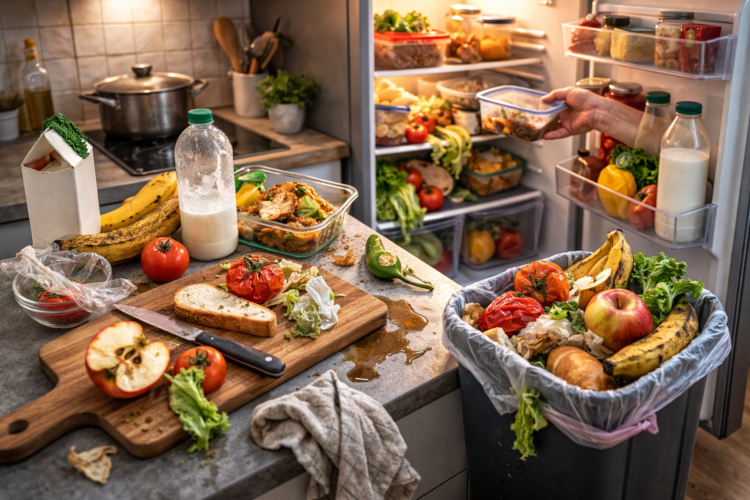
Every day, millions of households unknowingly waste food because of a simple kitchen habit: poor food storage and overbuying combined with forgotten leftovers. This seemingly harmless behavior silently doubles the amount of edible food that ends up in the trash.
Globally, around 19% of food available to consumers is wasted, with households responsible for the largest share. This wasted food contributes significantly to environmental damage and economic loss. Food waste generates up to 10% of global greenhouse gas emissions, making it a serious environmental issue.

Even more striking, around 60–61% of total food waste happens in households, not restaurants or supermarkets. Many of these losses come from everyday kitchen habits that people rarely notice. In this article, we explore the main habit that quietly doubles food waste, why it happens, and how to prevent it.
The Everyday Kitchen Habit That Doubles Food Waste
The most common habit responsible for increased food waste is improper food storage combined with buying more food than needed. People often place food randomly in the refrigerator, forget leftovers at the back of shelves, or store produce incorrectly. As a result, food spoils faster or is simply forgotten until it becomes inedible.
Research shows that inadequate storage, poor meal planning, and confusion about food labels are among the biggest drivers of household food waste.

This habit creates a chain reaction:
- Food is bought in large quantities.
- Storage becomes messy or disorganized.
- Food gets forgotten or spoils faster.
- It is thrown away.
Over time, this pattern can double the amount of food wasted in a typical kitchen.
Global Food Waste Statistics
Understanding the scale of the problem highlights why changing this habit matters.
| Statistic | Data |
|---|---|
| Global food wasted annually | Around 931 million tonnes |
| Food wasted by households | 60–61% of total waste |
| Average food waste per person (global estimate) | About 121 kg per year |
| Global economic cost of food waste | Around $1 trillion annually |
| Share of greenhouse emissions from food waste | Up to 10% of global emissions |
| Most wasted food categories | Fruits, vegetables, dairy, meat |

These figures reveal that household behavior plays the biggest role in the global food waste crisis.
Why Improper Storage Leads To Massive Waste
Many people believe that placing food in the refrigerator automatically preserves it. However, improper storage inside the fridge can accelerate spoilage.
Common storage mistakes include:
1. Incorrect Refrigerator Temperature
Food stored at the wrong temperature spoils faster. Studies show that poor refrigeration practices alone can lead to 5–20% food loss.
2. Mixing Fruits And Vegetables
Some fruits release ethylene gas, which speeds up ripening and causes nearby vegetables to spoil quickly.
3. Ignoring Fridge Zones
Different foods require different humidity levels. For example:
- Leafy greens require high humidity drawers
- Fruits often need low humidity storage
Storing them incorrectly leads to faster spoilage.
4. Forgotten Leftovers
Leftovers pushed to the back of the refrigerator are frequently forgotten and eventually thrown away.
The “Overbuying” Trap In Modern Kitchens
Another everyday habit that fuels food waste is overbuying groceries. Retail promotions, large package sizes, and lack of meal planning encourage consumers to buy more food than they actually need.
Common triggers include:
- “Buy one get one free” deals
- Shopping without a list
- Buying groceries while hungry
- Bulk purchases that spoil before use
Studies show that lack of meal planning and excessive purchases are among the top drivers of household food waste. As a result, refrigerators become overcrowded and food gets buried or forgotten.
The Environmental Cost Of This Habit
Food waste does not just affect household budgets—it also harms the planet. When food ends up in landfills, it decomposes and releases methane, a greenhouse gas far more potent than carbon dioxide.
Key environmental impacts include:
- Waste of water and energy used to produce food
- Increased greenhouse gas emissions
- Pressure on land and natural resources
In fact, food waste emissions exceed those from the aviation industry. Reducing food waste at home can therefore significantly reduce environmental damage.
The Financial Impact On Households
Many families underestimate how much money they lose through wasted food. Studies suggest that households can waste hundreds of dollars annually on uneaten groceries, especially fruits, vegetables, and leftovers. Even simple changes like organizing your refrigerator or planning meals can dramatically reduce these costs.
How To Break The Habit And Reduce Food Waste
Fortunately, preventing food waste does not require drastic lifestyle changes.
1. Plan Meals Before Shopping
Create a weekly meal plan and shopping list.
2. Organize Your Refrigerator
Place older items at the front and new items at the back.
3. Store Food Correctly
Use humidity drawers and keep fruits and vegetables separated.
4. Understand Date Labels
“Best before” often indicates quality, not safety.
5. Freeze Extra Food
Freezing leftovers extends their shelf life and prevents waste. Small daily changes can significantly reduce waste over time.
The Future Of Food Waste Reduction
Governments, businesses, and households are increasingly recognizing the importance of reducing food waste. Global sustainability initiatives aim to cut food waste by 50% by 2030 as part of international climate and sustainability goals.
New technologies such as:
- Smart refrigerators
- Food tracking apps
- AI meal planners
are helping households manage food more efficiently.
However, the biggest impact still comes from changing everyday kitchen habits.
Conclusion
The everyday kitchen habit that quietly doubles your food waste is poor food storage combined with overbuying and forgotten leftovers. Because households account for the majority of global food waste, small behavioral changes can make a massive difference.
Organizing the refrigerator, planning meals, and understanding food storage can help families save money while protecting the environment. Food waste is not just a global issue—it starts in our kitchens. Recognizing and correcting this habit is one of the simplest and most powerful steps toward a more sustainable future.
FAQs
What is the biggest cause of food waste at home?
The biggest causes are poor storage practices, overbuying groceries, and forgetting leftovers in the refrigerator.
How much food does the average household waste each year?
Estimates suggest individuals waste tens of kilograms of food annually, with households responsible for about 60% of total food waste globally.
Which foods are wasted the most?
The most wasted foods are fruits, vegetables, dairy products, bread, and leftovers from cooked meals.