
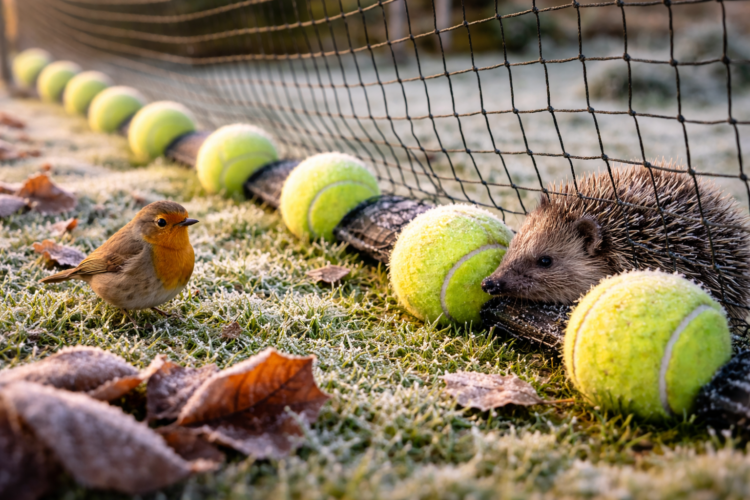
Tennis balls in the garden may sound like an unusual wildlife hack, but gardeners and wildlife experts increasingly recommend this simple winter trick to make gardens safer for small animals. During cold months, birds and hedgehogs face multiple hazards including icy surfaces, frozen water sources, and dangerous garden nets or containers.
A surprisingly effective solution is placing tennis balls strategically around garden nets, ponds, feeders, and pathways. These bright, textured balls create grip points, visual markers, and flotation aids that help wildlife avoid injuries or escape traps.

As climate change causes more unpredictable winter weather and urban gardens become key wildlife habitats, such low-cost garden safety techniques are gaining popularity among conservationists and wildlife-friendly gardeners.
Why Winter Is Dangerous For Garden Wildlife
Winter conditions create several environmental risks for birds and hedgehogs in residential gardens.
Cold temperatures cause:
- Frozen water sources, making hydration difficult
- Icy lawns and paths, increasing risk of slipping injuries
- Reduced food availability due to snow cover
- Traps around garden structures, including netting, fencing, and water containers

Small mammals like hedgehogs are particularly vulnerable because they forage close to the ground and often rely on gardens for survival. Studies show that hedgehog populations in some regions have declined dramatically in recent decades due to habitat loss and urban hazards. Creating safer garden environments during winter can therefore play an important role in supporting wildlife.
How Tennis Balls Help Birds And Hedgehogs
A tennis ball may seem like a trivial object, but its design provides several practical benefits for wildlife. The rubber core and felt surface create grip, visibility, and buoyancy that can help animals navigate difficult winter conditions.
Key Benefits
- Stable Landing Spots For Birds
When snow or frost covers a lawn, birds searching for food can struggle to find stable places to land. Tennis balls create visible and textured surfaces that birds can use as temporary perches. Their bright color makes them easy to spot against snow.
- Grip And Balance For Hedgehogs

Hedgehogs moving across icy ground may slip while trying to reach food or shelter. The rough felt of a tennis ball offers something to push against or steady themselves with.
- Flotation Aid In Water
In ponds, buckets, or bird baths, a floating tennis ball can act as a temporary support if an animal falls in, helping them stay afloat long enough to escape.
- Prevent Complete Freezing Of Water
A floating ball moves with the wind and disrupts ice formation, often leaving a small open area for birds and hedgehogs to drink.
- Mini Shelter Zones
Tennis balls can also create tiny protected spaces between the ball and soil where insects gather, providing food sources for wildlife.
Table: How Tennis Balls Improve Garden Wildlife Safety
| Feature | How It Helps Wildlife | Benefit For Animals |
|---|---|---|
| Textured felt surface | Provides grip on icy ground | Prevents slips and injuries |
| Bright color | Easy for birds to see in snow | Safer landing points |
| Floating ability | Supports animals in water | Prevents drowning |
| Movement on water | Stops full ice formation | Keeps drinking water accessible |
| Shelter pockets | Attracts insects | Additional food source |
How To Use Tennis Balls In The Garden
Using tennis balls effectively requires careful placement.
1. Around Garden Nets
Garden nets used to protect plants can trap wildlife if animals become entangled. Placing tennis balls at edges or corners increases visibility and can reduce accidental collisions.
2. On Lawns During Frost Or Snow
Scatter several balls across frosty lawns to create safe landing points for birds and help them locate food sources.
3. Near Bird Feeders And Bird Baths
Position balls close to feeding stations so birds have stable surfaces to perch or land before eating.
4. In Ponds And Water Containers
Place one or two balls in:
- Bird baths
- Water bowls
- Rain barrels
- Garden ponds
This prevents complete freezing and provides flotation support.
5. Along Hedgehog Paths
Hedgehogs commonly travel along:
- Hedge lines
- Fence bases
- Log piles
Placing tennis balls nearby can help them navigate icy conditions.
Additional Wildlife-Friendly Garden Tips
While tennis balls help, they should be part of a broader wildlife-friendly gardening strategy.
Consider combining the trick with:
- Hedgehog houses or shelters
- Leaf piles for winter nesting
- Bird feeders with high-energy seeds
- Wildlife corridors or “hedgehog highways” in fences
- Shallow water dishes with stones for escape
These steps create safer micro-habitats in urban environments where wildlife increasingly depends on gardens for survival.
Future Importance Of Wildlife-Friendly Gardening
Urban gardens are becoming crucial ecosystems. As cities expand, wildlife increasingly relies on small green spaces for food and shelter.
Simple actions like placing tennis balls can contribute to:
- Urban biodiversity conservation
- Reduced accidental wildlife deaths
- Increased awareness of garden ecology
In the future, sustainable gardening practices may become a central part of urban environmental policy and community conservation initiatives.
Conclusion
The idea of tennis balls in the garden might sound unusual, but it represents a practical and affordable wildlife safety measure. Their textured surface, buoyancy, and visibility make them useful tools for helping birds and hedgehogs navigate winter hazards.
By placing tennis balls around nets, ponds, feeders, and icy pathways, gardeners can reduce injuries, prevent drowning, and provide safer landing spots for wildlife. While this trick alone cannot solve the broader challenges facing wildlife populations, it demonstrates how small everyday actions can contribute to a healthier ecosystem.
In a world where urban environments increasingly overlap with wildlife habitats, even simple objects like tennis balls can help transform gardens into safe havens for vulnerable species.
FAQs
Do Tennis Balls Really Help Birds In Winter?
Yes. Their textured surface provides safe landing points on icy ground, helping birds avoid slipping and making food sources easier to reach.
Can Tennis Balls Prevent Ponds From Freezing?
A floating tennis ball can reduce complete ice formation by moving with wind and water, leaving small openings for wildlife to drink.
How Many Tennis Balls Should Be Used In A Garden?
Most small gardens need 5–10 balls placed in strategic areas, such as near feeders, lawns, ponds, and wildlife pathways.