
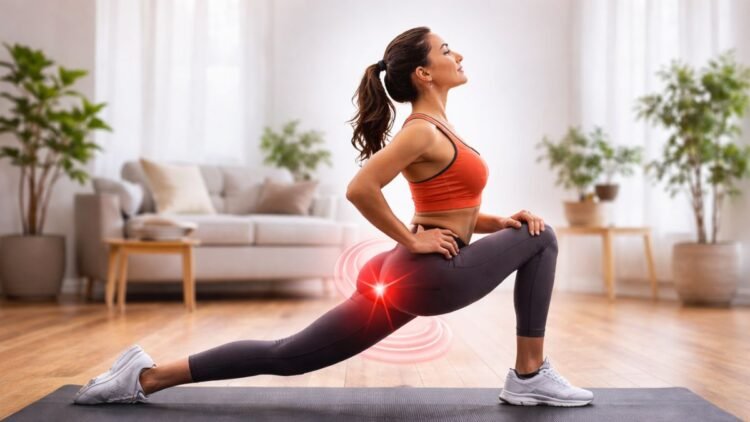
Tight hips are a common problem, especially for people who spend long hours sitting at a desk. Limited hip mobility can cause stiffness, shorter walking strides, discomfort during exercise, and even lower back pain. For many people, the biggest challenge isn’t knowing that mobility work helps—it’s finding the time to do it consistently.
Short routines that take less than ten minutes can be much easier to stick with. A simple seven-minute hip mobility routine designed by personal trainer Lindsey Bomgren focuses on loosening tight hips using controlled movements and gentle strengthening exercises. The routine requires no equipment and can easily fit into a daily schedule.

After following this routine regularly for several weeks, many people notice improvements in flexibility, posture, and overall comfort while moving.
Why Hip Mobility Is Important
The hips play a major role in everyday movement. They connect the upper and lower body and support activities like walking, running, bending, and sitting. When the hips become tight, other parts of the body—such as the lower back and knees—often compensate, which can lead to discomfort or injury.
Poor hip mobility is commonly caused by:
- Long periods of sitting
- Lack of stretching or movement
- Repetitive exercise patterns
- Weak hip stabilizing muscles

Improving mobility allows the hips to move freely through their full range of motion. This can reduce stiffness, improve posture, and make everyday movements feel smoother and more comfortable.
The Seven-Minute Hip Mobility Routine
This routine includes seven exercises performed for one minute each. The sequence moves the hips through multiple directions and positions, helping to improve both flexibility and strength.
The exercises include:
1. Pigeon Pose 90/90

This position targets deep hip rotation and stretches the muscles around the hip joint. It helps open tight hips and improve flexibility in the hip capsule.
2. 90/90 Rear Knee and Heel Lifts
These small controlled movements activate stabilizing muscles around the hips while maintaining the 90/90 position. They improve control and strengthen the muscles responsible for hip rotation.
3. Tabletop Hip Circles
In a tabletop position, the hips move in circular patterns. This exercise increases joint mobility and helps lubricate the hip joint, making movements smoother.
4. Frog Rocks
Frog rocks gently stretch the inner thighs and hip adductors. The rocking motion gradually increases range of motion without putting excessive pressure on the joints.
5. V-Sit Leg Lifts
This exercise challenges hip flexor strength while maintaining a seated position. Strengthening the hip flexors helps stabilize the hips during walking and running.
6. Cossack Squats
Cossack squats work the hips through a wide range of motion, strengthening the inner thighs while improving lateral mobility. They also help increase balance and control.
7. Controlled Hip Rotation
This final movement reinforces hip rotation in a controlled way, helping the body maintain flexibility gained during the routine.
Together, these exercises move the hips through internal rotation, external rotation, flexion, and lateral movement, which are essential for healthy hip function.
Benefits of Following the Routine Regularly
Reduced Daily Stiffness
One of the most noticeable benefits of this routine is reduced stiffness after sitting for long periods. Gentle mobility work helps keep the hip joints active, preventing the tight feeling that often occurs after hours at a desk.
Improved Range of Motion
Exercises like Cossack squats and hip circles encourage movement in multiple directions. Over time, this helps the hips move more freely, making activities such as walking, bending, or running feel easier.
Better Muscle Support
This routine combines mobility with strength. Movements such as V-sit leg lifts activate muscles that stabilize the hips, helping maintain flexibility while preventing instability.
Why Short Routines Work Better
Many people struggle to stay consistent with long workout sessions. A seven-minute routine is much easier to include in a daily schedule. It can be performed:
- Before starting the workday
- During a short break
- After a workout
- Before going to bed
Because it requires no equipment and very little space, it becomes easier to repeat regularly. Consistency is often more important than duration when it comes to improving mobility.
Who Can Benefit From This Routine
This hip mobility routine is particularly useful for:
- People who sit for long hours at work
- Runners experiencing hip stiffness
- Fitness beginners looking to improve flexibility
- Anyone who feels tightness in the hips or lower back
Even athletes can use it as a warm-up or recovery routine to maintain healthy hip movement.
Tips for Getting the Best Results
To maximize the benefits of this routine, consider the following tips:
- Perform the exercises slowly and with control
- Focus on proper posture during each movement
- Breathe steadily to help muscles relax
- Repeat the routine several times a week for consistent results
If any movement causes pain, it is best to stop and modify the exercise.
Conclusion
Tight hips can make everyday movements uncomfortable and limit physical activity. A short mobility routine can help restore flexibility and reduce stiffness without requiring a long workout session.
This seven-minute hip mobility routine works by combining gentle stretching with strengthening movements that improve hip rotation and stability. Because it takes only a few minutes and requires no equipment, it’s easy to include in a daily schedule.
With consistent practice, even a short routine like this can lead to noticeable improvements in flexibility, comfort, and overall movement.
FAQs
How often should I do hip mobility exercises?
For best results, hip mobility exercises can be performed daily or at least three to four times per week.
Can hip mobility exercises reduce lower back pain?
Yes. Improving hip flexibility can reduce strain on the lower back, which may help relieve discomfort caused by tight hips.
Do I need equipment for hip mobility routines?
Most hip mobility exercises require no equipment and can be performed using just bodyweight and a comfortable floor surface.