
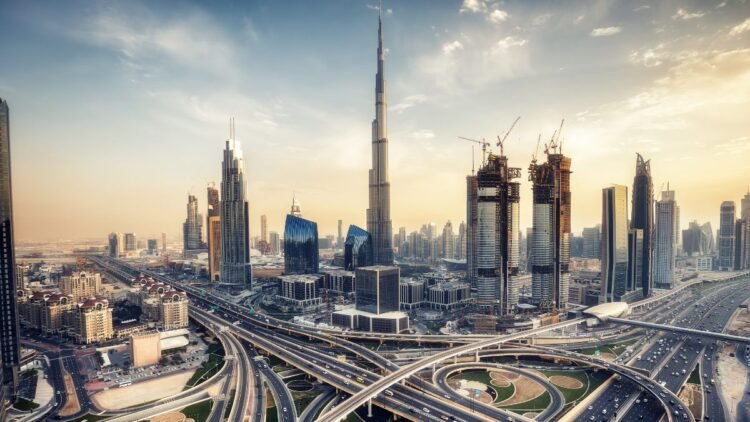
The city of Jeddah is stirring with ambition. Even late at night, the desert air hangs heavy and warm as cranes blink red against the dark sky. On the Corniche, locals watch in quiet awe, aware of the vision taking shape beyond the horizon: a skyscraper that could rise 1,000 meters, taller than the Burj Khalifa and Shanghai Tower combined.
Unlike past projects focused solely on bragging rights, Saudi Arabia’s new tower represents more than height—it’s a statement of innovation, ambition, and a strategic pivot toward a diversified economy.
The Return of the Jeddah Tower
On the outskirts of Jeddah, the skeleton of what was once the ambitious Jeddah Tower still stands. Concrete cores, scaffolding, and rusted rebar mark a project paused years ago. But now, Saudi Arabia is back, with new tenders, fresh negotiations, and a bold goal: to break the 1 km barrier.
If completed, this tower would be roughly three Eiffel Towers stacked on top of each other, featuring elevators faster than high-speed trains, façades resilient to Red Sea winds, and foundations drilled deep into challenging soil. The project is as much an engineering marvel as it is a logistical challenge, requiring thousands of workers to operate in precise synchrony.
Why Saudi Arabia Wants to Build It
A 1 km skyscraper is more than a construction feat—it’s a symbol. Saudi Arabia aims to:
- Attract global investment: A record-breaking tower signals economic ambition and capability.
- Diversify the economy: Moving away from oil dependence, Saudi Arabia is promoting tourism, finance, and technology.
- Create a cultural icon: Just as Dubai’s Burj Khalifa became a global magnet, this tower would place Jeddah on the world stage.
The building is designed to inspire both visitors and locals, offering sky-high vistas, luxury spaces, and new career opportunities in engineering, hospitality, and design.
Engineering Challenges of a 1 km Tower
Building a kilometer-high tower is a technical puzzle with no room for error. Key challenges include:
- Foundations: Deep concrete mats and piles are required to stabilize the building against unstable, salty soil.
- Wind and climate: Each floor tapers to reduce wind stress, while Red Sea humidity, heat, and sandstorms demand specialized façades and ventilation systems.
- Technology and logistics: Elevators, glass, and structural systems must evolve over a decade-long project without becoming outdated.
- Funding and politics: Projects of this scale face fluctuating costs, economic shifts, and political considerations that can delay or halt construction.
Every detail, from steel orders to concrete pours, requires precision. Any misstep could set back the project by months, if not years.
From Fantasy Render to Reality
Today, the gap between social media renders and actual construction is wide. Digital images show mirrored glass spires, elegant sky decks, and futuristic designs, while the real site remains largely empty. Yet this vision is more than a spectacle—it is a strategic message.
A kilometer-high tower communicates that Saudi Arabia is open for business, innovation, and global attention. It’s a magnet for investment, tourism, and talent, shaping perceptions faster than any advertisement or press release ever could.
Environmental and Urban Considerations
Mega-towers are not without their critics. Vertical density can reduce urban sprawl, requiring fewer roads and infrastructure, but maintaining a 1 km glass tower in extreme heat is energy-intensive. Saudi Arabia must incorporate:
- Smart shading and insulation to reduce cooling needs
- Recycled water and renewable energy systems to lower environmental impact
- Advanced façades to withstand climate challenges
The tower is both a symbol of ambition and a test case for sustainable urban mega-projects.
Saudi Arabia’s 1 km skyscraper is more than a quest for height. It is a bold statement of innovation, economic diversification, and cultural ambition. From engineers and architects to tourists and locals, everyone is watching to see if this audacious vision will transform the skyline—and the country’s global image.
Whether viewed as genius, vanity, or both, the tower promises to redefine what is possible in architecture and urban planning.
FAQs
Will the Saudi 1 km tower be taller than Burj Khalifa?
Yes. The new tower is planned to surpass Burj Khalifa’s 828 meters, making it the tallest building in the world if completed.
When could the 1 km tower realistically open?
Projects of this scale typically take a decade or more, depending on construction pace, funding, and engineering challenges.
Is the Jeddah Tower project officially back on?
Saudi authorities have restarted tenders and signaled renewed intent, though final contracts and designs are still evolving.