


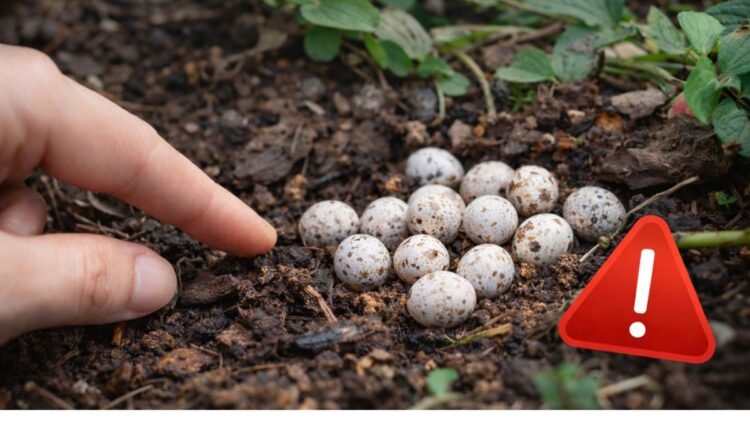
One quiet spring morning, Melissa Carter stepped into her backyard to water her vegetable garden. The air was fresh after overnight rain, and the soil still smelled damp. As she walked along the small gravel path beside her tomato plants, something unusual caught her attention.
Scattered across the dirt were several small, smooth objects that looked like tiny pebbles. They blended perfectly with the surrounding stones, making them almost invisible. Curious, Melissa bent down and picked one up.


The object felt lighter than a normal stone, and its surface had a subtle pattern. Realizing something wasn’t quite right, she quickly searched online for answers. What she discovered surprised her.
Those pebble-like objects weren’t stones at all—they were eggs. And they likely belonged to a protected wildlife species. If she had accidentally damaged or removed them, she could have faced serious consequences. In some regions, disturbing protected nests can lead to fines reaching €150,000.
Situations like this are becoming increasingly common as wildlife adapts to living closer to human environments. Understanding why these eggs appear in gardens—and why they must be protected—is important for homeowners everywhere.
Why Some Animal Eggs Look Like Pebbles

Nature has developed incredible survival strategies over millions of years. One of the most effective techniques is camouflage.
Many reptiles and ground-nesting birds lay eggs that blend perfectly into their surroundings. Their shells may mimic the colour, shape, or texture of stones and soil. From above, they can appear almost identical to small pebbles scattered across the ground.
This natural disguise helps protect eggs from predators. Animals such as turtles, lizards, and certain bird species often lay eggs directly on the ground or bury them just beneath sand or loose soil.

Unlike birds that build visible nests in trees or bushes, these animals rely on camouflage instead of protection from structures. Unfortunately, this strategy can also make the eggs difficult for humans to recognize.
As a result, people sometimes disturb them accidentally while gardening or cleaning outdoor spaces.
Which Protected Species May Lay These Eggs
In many countries across Europe and other regions, several wildlife species are protected by law due to declining populations.
Some of the animals known to lay camouflaged eggs include:
- Certain species of turtles and tortoises
- Ground-nesting birds
- Protected reptiles such as some lizard species
- Coastal or wetland bird species
As natural habitats shrink due to urban development, these animals are increasingly searching for safe nesting areas in suburban environments.
Gardens, yards, and landscaped spaces can often resemble the sandy or gravelly habitats these species prefer.
Why Disturbing the Eggs Can Lead to Heavy Fines
Wildlife protection laws are designed to protect vulnerable species and prevent further population decline.
In many regions, disturbing a protected nest, damaging eggs, or interfering with breeding areas is considered a serious environmental offence. Authorities enforce strict penalties to discourage harmful activities.
In extreme cases involving deliberate destruction of protected nests, fines can reach €150,000 or more.
However, the purpose of these laws is not to punish homeowners who make honest mistakes. Instead, the goal is to raise awareness and encourage people to protect wildlife habitats whenever possible.
By understanding what these eggs look like and how to respond, accidental harm can be prevented.
Why Wildlife Chooses Gardens for Nesting
It might seem surprising that animals choose suburban gardens for nesting, but many yards offer ideal conditions.
Modern landscaping can unintentionally create environments that resemble natural habitats. Features such as sandy soil, gravel pathways, rock gardens, and quiet corners provide perfect nesting spots for certain species.
Gardens can also provide additional protection from predators. Fences, buildings, and human presence may deter larger animals that would normally threaten nests in the wild.
As urban areas expand, wildlife often adapts by nesting closer to human homes.
Signs the “Pebbles” Could Actually Be Eggs
Because camouflaged eggs blend so well into their surroundings, it can be difficult to identify them immediately.
However, a few clues may indicate they are eggs rather than stones:
- They appear unusually smooth or evenly shaped
- Several objects are grouped closely together
- The surface may show faint patterns or colour variations
- The surrounding soil appears slightly disturbed
If you notice these signs, it is best to assume they may be wildlife eggs and avoid touching them.
What To Do If You Find These Eggs
If you discover pebble-like eggs in your garden, the safest approach is simple: leave them alone.
Here are a few recommended steps:
- Avoid touching or moving the eggs
- Keep pets and children away from the area
- Avoid digging or gardening nearby
- Contact local wildlife authorities if you need guidance
Experts can help identify the species and determine whether the eggs require protection or monitoring.
In many cases, the best solution is simply allowing nature to take its course until the eggs hatch.
Why Protecting Wildlife Nests Matters
Many species that lay camouflaged eggs are already facing serious threats. Habitat destruction, climate change, pollution, and urban expansion have reduced their populations in many regions.
Each successful nest plays an important role in maintaining healthy wildlife populations. Protecting these eggs helps ensure the survival of future generations.
For homeowners, discovering a nest can also become a unique opportunity to observe nature up close. Watching hatchlings emerge weeks later can be a remarkable and educational experience.
Conclusion
Finding small pebble-like eggs in your garden may seem unusual, but it is often a sign that wildlife has chosen your yard as a safe nesting spot. These eggs may belong to protected species, and disturbing them could lead to serious legal consequences.
More importantly, leaving them undisturbed helps protect vulnerable animals and supports local ecosystems. If you ever encounter these mysterious “pebbles,” take a moment to look closer—but remember the most important rule: do not touch them.
Sometimes the most fascinating examples of nature are hiding in plain sight, waiting to be noticed.
FAQs
What animals lay eggs that look like pebbles?
Several reptiles and ground-nesting birds lay camouflaged eggs that resemble stones or gravel to protect them from predators.
What should I do if I find these eggs in my garden?
Do not touch them. Leave the area undisturbed and contact local wildlife authorities if you need identification or advice.
Can disturbing these eggs really lead to fines?
Yes. In some regions, disturbing nests of protected species can lead to significant penalties, sometimes reaching €150,000 in serious cases.