
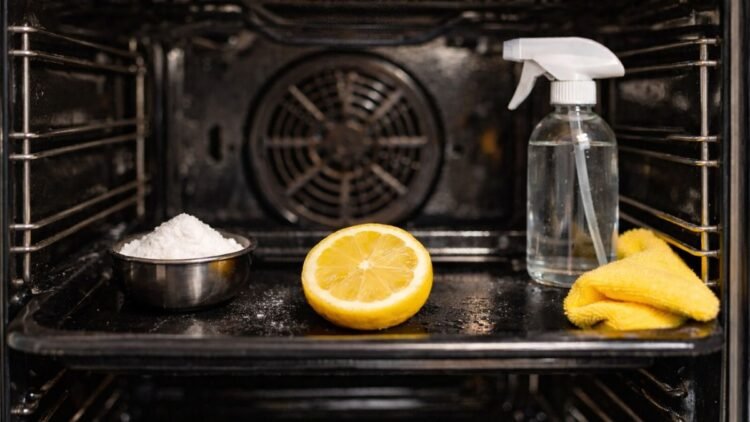
At first, it sounds like a quirky social media trick: place a slice of lemon in your cold oven and just leave it there. No preheating, no harsh cleaning products — just a single lemon slice sitting on the metal rack.
Despite seeming simple, this practice has gained popularity online, appearing on TikTok cleaning hacks and lifestyle videos. People swear by the subtle change it brings: a faintly fresher, slightly brighter scent inside the oven without lifting a scrub brush.
Why a Lemon in a Cold Oven Works
This trend isn’t magic. The lemon doesn’t dissolve grease or remove baked-on grime. What it does do is release mild citric acid and essential oils into the enclosed space.
These molecules lightly coat the oven’s interior and reduce lingering odors from previous meals, shifting the overall smell from stale or greasy toward clean and fresh.
For example, Emma, a 34-year-old home cook, discovered that leaving a lemon slice in her cold oven overnight softened the burnt-fat odor that lingered despite cleaning sprays and deep-clean cycles. The effect isn’t dramatic, but it is noticeable — the air smells lighter, fresher, and more inviting.
How to Use the Lemon Slice Effectively
Follow these simple steps for the best results:
- Choose a fresh, juicy lemon — avoid old or dried-out slices.
- Cut a slice about 1 centimeter thick and place it directly on the middle rack.
- Keep the oven completely cold — do not preheat or turn it on.
- Close the oven door and leave the lemon inside for several hours or overnight.
- Replace the slice every day or two for strong odors, or weekly for maintenance.
This technique is best seen as a small ritual rather than a deep-cleaning solution. It’s a gentle, low-effort way to improve the overall kitchen atmosphere after cooking strong-smelling foods.
When the Lemon Trick Helps — And When It Doesn’t
- Helpful:
- Reduces residual odors from pungent meals like fish or garlic.
- Adds a light, fresh scent in older rental ovens with persistent smells.
- Provides a gentle, plant-based alternative to harsh chemical cleaners.
- Not Helpful:
- Does not remove baked-on grease or sticky residue.
- Won’t solve mechanical issues like faulty oven seals or ongoing drips.
- May irritate those sensitive to citrus; alternatives include a bowl of baking soda or coffee grounds.
Some people turn this into a small post-cooking ritual: after preparing a strong meal and letting the oven cool, a lemon slice is placed inside as a “reset” for the kitchen space. Over time, it becomes an easy habit that maintains a subtly fresher oven environment.
Extra Tips for Maximum Freshness
- Wipe the oven door weekly with a damp cloth.
- For a slightly stronger effect, place lemon slices in a dish with water and warm the oven at low heat briefly, then let it cool with the door closed.
- Use the same lemon slice to wipe racks before washing.
- Keep a lemon specifically for cleaning tasks separate from cooking.
This approach isn’t about perfection; it’s about creating small, repeatable habits that improve your kitchen environment without adding extra work.
Key Points
| Key Point | Detail | Benefit to Reader |
|---|---|---|
| Lemon in a cold oven freshens odors | Releases mild acid and essential oils | Softens lingering smells without chemicals |
| Not a deep-cleaning method | Doesn’t remove baked-on grease | Helps manage expectations |
| Best used as a simple ritual | Leave a fresh slice overnight after cooking | Easy, low-effort way to keep the oven smelling fresh |
FAQs
Do I need to heat the oven for the lemon trick to work?
No. The popular method works in a completely cold oven. For a slightly stronger effect, you can warm a dish of lemon slices in the oven briefly, then let it cool with the door closed.
How long can I leave the same lemon slice inside?
Ideally, change it every 24–48 hours. Beyond that, it dries out and loses fragrance, making it less effective.
Can this replace regular oven cleaning?
No. The lemon trick freshens odors but does not remove baked-on grease or stubborn stains. Traditional cleaning methods are still needed for hygiene.