


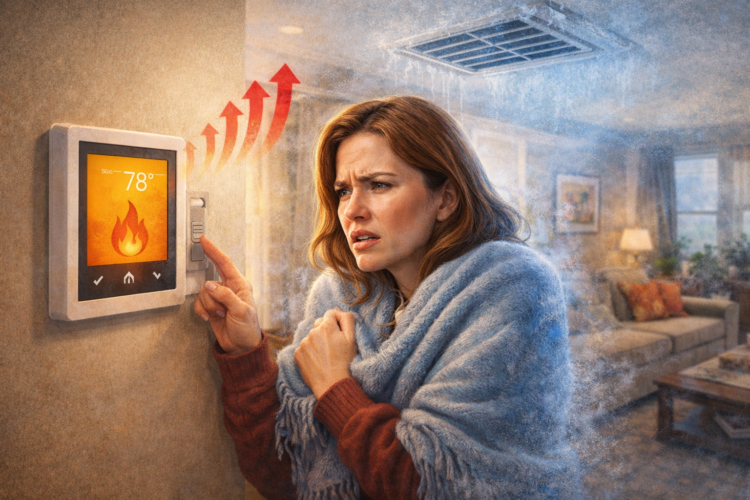
Many homeowners share the same frustrating experience: “I kept turning up the heat and stayed cold.” When indoor temperatures feel uncomfortable despite increasing the thermostat, most people assume the heating system is too weak. However, energy experts say the real problem is often heat loss, poor insulation, or airflow issues, not the heater itself.
In reality, homes frequently lose heat faster than heating systems can replace it. Experts explain that turning up the thermostat rarely solves the issue and can actually increase energy bills without improving comfort.
The Misunderstood Heating Problem in Homes


The core issue experts highlight is heat escaping from the home faster than it is produced. This phenomenon is called heat loss, which occurs when warm indoor air escapes through walls, windows, roofs, floors, or ventilation gaps. Many homeowners assume that increasing the thermostat temperature will warm the house faster.
However, heating systems operate at a fixed output level. Increasing the thermostat simply means the heater runs longer, not stronger. As a result, if a home has structural inefficiencies, the heat continues to escape, leaving occupants cold despite higher energy consumption.
Why Homes Feel Cold Even With the Heating On
Experts point to several common causes behind this issue. Most of them are linked to energy efficiency and airflow problems rather than heater capacity.
Poor Insulation

Insulation is designed to trap heat inside the building envelope. Without sufficient insulation, heat escapes quickly through walls and roofs. Research shows that up to 25% of heat can escape through an uninsulated roof alone.
In many countries, millions of homes still lack proper insulation. Studies show that around one-third of lofts in Great Britain have no loft insulation, significantly reducing heating efficiency. Poor insulation can make rooms feel cold even if the thermostat shows a comfortable temperature.
Drafts and Air Leaks
Another major reason homes feel cold is air leakage. Small gaps around windows, doors, and wall joints allow warm air to escape and cold air to enter. These leaks create cold spots and uneven temperatures across rooms, which makes the home feel colder than the thermostat reading suggests.

Experts recommend sealing cracks, installing weatherstripping, and using proper window insulation to reduce drafts.
Blocked Radiators or Vents
In many homes, furniture or curtains accidentally block heating vents or radiators. When airflow is restricted, warm air cannot circulate properly through the room. This reduces the effectiveness of the heating system and creates uneven temperatures.
Even simple changes, such as moving furniture away from radiators, can significantly improve heating performance.
Thermostat or Heating System Issues
Sometimes the issue is not heat loss but faulty heating controls. Thermostats can become miscalibrated, causing the heating system to shut off before the home reaches the desired temperature. Older heating systems may also struggle to distribute heat evenly throughout larger homes.
Experts generally recommend replacing heating systems older than 15 years with more efficient models.
Uneven Temperature Distribution
Many houses suffer from temperature imbalance, especially multi-story homes. Warm air naturally rises, which means upper floors may feel warmer while ground floors remain cold. Homes without zoned heating systems often struggle to maintain consistent comfort across all rooms.
Common Heat Loss Areas in Homes
The following table summarizes typical heat loss sources and their estimated impact.
| Home Area | Estimated Heat Loss | Why It Happens | Recommended Fix |
|---|---|---|---|
| Roof or Loft | Up to 25% | Heat rises and escapes through poorly insulated roofs | Install loft insulation |
| Walls | 20–35% | Poor wall insulation or thermal bridging | Cavity wall insulation |
| Windows and Doors | 10–20% | Drafts and air leaks | Weatherstripping and double glazing |
| Floors | 10–15% | Cold air infiltration from below | Floor insulation and sealing |
| Ventilation Leaks | 5–10% | Gaps in building envelope | Air sealing and duct repair |
Heat loss from these areas means the heating system must work harder to maintain temperature.
The Cost of Misreading the Problem
When homeowners assume the heater is the problem, they often increase thermostat settings repeatedly. However, this approach leads to:
- Higher energy bills
- Increased carbon emissions
- Faster wear on heating systems
- Continued indoor discomfort
Experts estimate that poorly insulated homes can waste up to 65% of the heat produced by heating systems. This wasted energy translates directly into higher utility costs.
Simple Expert Solutions to Fix the Problem
Fortunately, many solutions are affordable and effective.
Improve Insulation
Adding insulation to roofs, walls, and floors can dramatically improve heat retention. Modern insulation materials help homes maintain stable indoor temperatures while reducing heating demand.
Seal Drafts
Common draft locations include:
- Window frames
- Door edges
- Attic hatches
- Electrical outlets
Sealing these gaps prevents cold air infiltration.
Upgrade Thermostats
Smart thermostats allow homeowners to control heating schedules, monitor energy usage, and maintain consistent indoor temperatures. They also help prevent overheating and unnecessary energy consumption.
Improve Heating Distribution
To improve airflow:
- Keep radiators unobstructed
- Bleed radiators to remove trapped air
- Install zoned heating systems for multi-floor homes
These steps ensure heat reaches every room effectively.
The Future of Home Heating Efficiency
Energy experts predict that smart homes, improved insulation technologies, and energy-efficient heating systems will reshape residential comfort in the coming decade. Governments worldwide are investing heavily in energy efficiency upgrades. New policies aim to improve building insulation, encourage heat pump adoption, and reduce residential energy waste.
Homes with better energy performance ratings already demonstrate significantly lower heating costs and improved indoor comfort. As climate concerns and energy costs rise, addressing heat loss will become a priority for homeowners globally.
Conclusion
The frustrating experience of “turning up the heat and still feeling cold” is rarely caused by a weak heater. Instead, it usually results from heat loss, poor insulation, air leaks, or uneven heat distribution. Understanding how heat escapes from homes allows homeowners to address the real issue rather than wasting energy on higher thermostat settings. With improved insulation, proper airflow, and efficient heating systems, homes can remain warm while using far less energy.
In the future, smarter building designs and energy-efficient technologies will make it easier to maintain comfortable indoor temperatures without increasing energy costs.
FAQs
Why does my house feel cold even when the thermostat is high?
This usually happens because heat escapes through insulation gaps, drafts, or poorly sealed windows, making the heater work harder without warming the room.
Does turning the thermostat higher heat the home faster?
No. Heating systems produce heat at a constant rate. Increasing the thermostat only keeps the system running longer, which raises energy costs.
What is the biggest source of heat loss in a home?
Roofs and lofts are major sources. Up to 25% of household heat can escape through an uninsulated roof.