


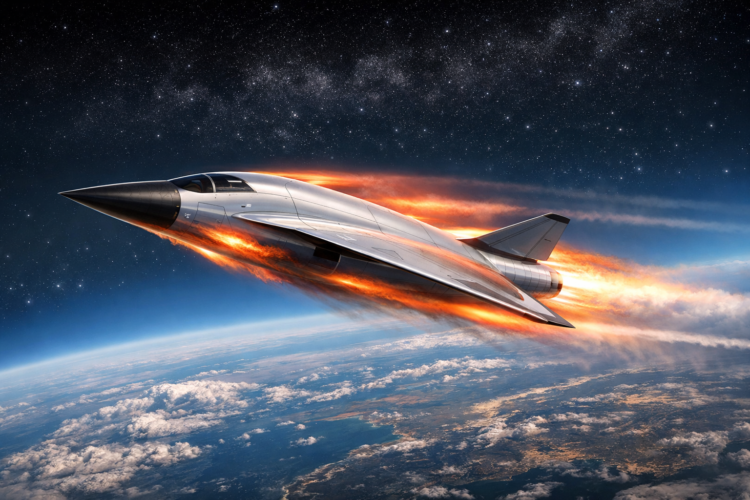
A new wave of aerospace innovation is capturing global attention: the idea of a hydrogen hypersonic jet capable of reaching 24,501 km/h. Headlines claim aircraft could soon travel twelve times the speed of sound, crossing continents in minutes. But what does science actually say about these claims?
Recent developments in hydrogen propulsion, scramjet engines, and hypersonic aerodynamics are pushing aviation toward speeds previously limited to experimental rockets. Companies such as Hypersonix Launch Systems are developing hydrogen-powered aircraft concepts that aim for speeds near Mach 12, equivalent to about 14,800 km/h depending on altitude conditions.


While some reports mention 24,501 km/h, which approaches Mach 20, this number often reflects theoretical upper ranges or speculative projections rather than confirmed aircraft capability. Understanding the difference between engineering reality and media headlines is essential when discussing hypersonic aviation.
What Is A Hydrogen Hypersonic Jet?
A hydrogen hypersonic jet is an aircraft designed to travel at hypersonic speeds (above Mach 5) using hydrogen as its primary fuel. Hypersonic vehicles typically rely on scramjet (supersonic combustion ramjet) engines that allow combustion to occur in supersonic airflow.
Hydrogen offers several advantages as a propulsion fuel:
- High energy-to-mass ratio
- Potential zero carbon emissions
- High combustion efficiency in scramjets

In hydrogen aircraft, fuel is usually stored in cryogenic tanks within the fuselage, since hydrogen cannot be stored in conventional wing tanks. These aircraft aim to operate at extreme altitudes and speeds, potentially transforming both defense systems and commercial aviation.
Hypersonic Speed Explained: Mach Numbers And Realistic Limits
Hypersonic flight begins at Mach 5, or five times the speed of sound. At sea level, Mach 1 is roughly 1,235 km/h. This means:
- Mach 5 ≈ 6,175 km/h
- Mach 10 ≈ 12,350 km/h
- Mach 12 ≈ ~14,800 km/h
Speeds near 24,501 km/h correspond to roughly Mach 20, which approaches orbital spacecraft velocities. In comparison, the International Space Station travels at about 27,600 km/h. This comparison highlights the challenge: sustained atmospheric flight near Mach 20 would require technology approaching spaceflight-level engineering.
Current Hydrogen Hypersonic Projects

One of the most widely discussed developments is the SPARTAN scramjet engine, created by the aerospace company Hypersonix. The engine is designed to operate using hydrogen fuel and 3D-printed components, with no moving parts.
The company is working on several aircraft concepts:
- DART AE – a small demonstrator vehicle about 3.5 meters long
- VISR – an 8-meter reusable hypersonic aircraft designed for surveillance missions
- Delta Velos – a hypersonic launch platform concept
These vehicles aim to demonstrate Mach 10–12 flight capability using hydrogen-powered scramjet propulsion. To support development, the project secured approximately $46 million in investment funding, signaling growing international interest in hypersonic technology.
Key Technical Data And Specifications
| Feature | Details |
|---|---|
| Target Speed | Up to Mach 12 (~14,800 km/h) |
| Hypersonic Threshold | Mach 5 (≈6,175 km/h) |
| Extreme Headline Speed | 24,501 km/h (~Mach 20, speculative) |
| Engine Type | Hydrogen-powered scramjet |
| Key Engine | SPARTAN scramjet |
| Fuel | Liquid or cryogenic hydrogen |
| Demonstrator Vehicle | DART AE (3.5 m long) |
| Larger Concept Aircraft | VISR (approx. 8 m long) |
| Funding Raised | Around $46 million |
| Key Applications | Defense, rapid transport, space launch |
Why Hydrogen Is Considered Ideal For Hypersonic Flight
Hydrogen is considered an excellent fuel for extreme-speed aviation due to several physical properties:
High Energy Density
Hydrogen has an energy-to-mass ratio of around 120 MJ/kg, much higher than conventional jet fuel. This allows more energy output for less fuel weight.
Faster Combustion
Hydrogen ignites easily and burns quickly, which is critical when combustion must occur within milliseconds in a scramjet engine.
Environmental Advantage
When hydrogen is used as fuel, the primary exhaust product is water vapor, offering the possibility of low-carbon aviation if green hydrogen is used.
Engineering Challenges Of Mach-12 Aircraft
Despite the excitement, hypersonic flight faces enormous engineering obstacles.
Extreme Heat
At Mach 10 and above, air friction can heat aircraft surfaces to over 1,000°C, requiring advanced materials such as ceramic matrix composites.
Airflow Physics
Hypersonic flight creates complex shock waves, air dissociation, and turbulent flow, making aerodynamic stability extremely difficult.
Hydrogen Storage
Liquid hydrogen must be stored at −253°C, requiring insulated cryogenic tanks and specialized infrastructure.
Combustion Stability
Keeping a flame stable in supersonic airflow inside a scramjet is one of the hardest propulsion challenges. Because of these factors, many hypersonic aircraft remain experimental.
Potential Real-World Applications
If hydrogen hypersonic jets become viable, they could revolutionize multiple industries.
Ultra-Fast Global Travel
Future aircraft could theoretically reduce intercontinental travel dramatically. For example:
- London to New York: under 1 hour
- Sydney to Los Angeles: about 2 hours
Military And Surveillance
Hypersonic aircraft could enable rapid intelligence, surveillance, and reconnaissance missions.
Space Launch Systems
Hypersonic vehicles may serve as reusable first stages for satellite launches, reducing costs.
Cargo Logistics
Ultra-fast cargo delivery could transform global supply chains.
Future Outlook: Are Mach-20 Aircraft Possible?
While Mach-12 hydrogen jets are already ambitious targets, Mach-20 atmospheric aircraft remain largely theoretical. Achieving such speeds would require:
- Next-generation heat-resistant materials
- Highly efficient scramjet propulsion
- Advanced thermal protection systems
- AI-assisted flight control
However, rapid progress in 3D-printed engines, hydrogen fuel systems, and hypersonic aerodynamics suggests that experimental flights in the Mach 8–12 range may become more common within the next decade.
Conclusion
The concept of a hydrogen hypersonic jet reaching 24,501 km/h captures the imagination, but current aerospace engineering suggests a more realistic near-term target of Mach 10–12 hypersonic flight. Technologies such as hydrogen scramjets, advanced thermal materials, and reusable hypersonic aircraft platforms are rapidly progressing, but the physics involved remains extremely demanding.
Nevertheless, these developments represent a major step toward a future where ultra-fast, low-carbon aviation could transform transportation, defense, and space access. If ongoing research succeeds, the coming decades may witness the dawn of a new hypersonic era in aerospace engineering.
FAQs
What Is A Hydrogen Hypersonic Jet?
A hydrogen hypersonic jet is an aircraft powered by hydrogen fuel capable of traveling at speeds above Mach 5 using scramjet propulsion.
Can A Jet Really Reach 24,501 km/h?
Some headlines mention this speed, but most real projects currently aim for Mach 10–12 (around 12,000–15,000 km/h).
Why Use Hydrogen Instead Of Jet Fuel?
Hydrogen provides higher energy efficiency, lighter fuel weight, and zero carbon emissions, making it attractive for future aviation.