


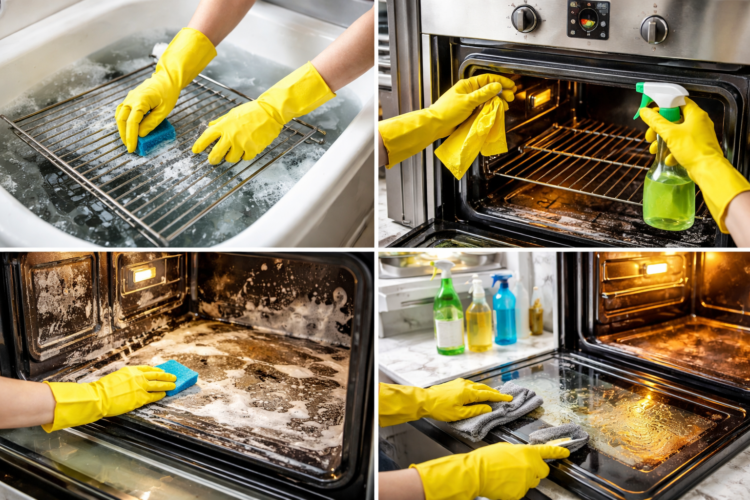
Keeping your oven clean is essential for kitchen hygiene, cooking efficiency, and appliance lifespan. Grease, food residue, and burnt spills accumulate over time, causing smoke, unpleasant odors, and even fire risks. Experts recommend wiping your oven regularly and performing a deep clean every 1–3 months depending on usage.
In this detailed guide, you will learn how to clean every part of your oven, including racks, the oven cavity, the bottom surface, and the glass door using effective modern methods and safe household cleaners.
Why Regular Oven Cleaning Is Important


A dirty oven doesn’t just look unpleasant—it can impact cooking results and indoor air quality.
Key benefits of regular cleaning include:
- Prevents smoke and burning smells during cooking
- Improves energy efficiency and heat circulation
- Reduces risk of grease fires
- Extends the life of your appliance
- Keeps food tasting fresh and uncontaminated
Food spills can carbonize and become harder to remove if ignored for too long. Cleaning experts recommend wiping spills quickly and deep-cleaning periodically.
Essential Oven Cleaning Tools and Ingredients

Before starting, gather the right supplies. Natural ingredients are widely recommended because they break down grease without harsh chemicals.
| Cleaning Item | Purpose | Usage Area |
|---|---|---|
| Baking Soda | Breaks down grease and food residue | Oven interior, racks |
| White Vinegar | Dissolves grime and deodorizes | Interior and door |
| Dish Soap | Removes grease effectively | Racks and trays |
| Microfiber Cloth | Gentle wiping without scratches | Glass door and surfaces |
| Non-scratch Sponge | Scrubbing baked food | Racks and oven floor |
| Plastic Scraper | Removes hardened residue | Oven bottom |
| Hot Water | Softens burnt debris | Racks soaking |
Baking soda acts as a mild abrasive and deodorizer, making it one of the most common ingredients used in eco-friendly oven cleaning.
Step-By-Step Process To Clean Your Entire Oven
Step 1: Empty The Oven Completely
Before cleaning, remove:
- Oven racks
- Baking trays
- Thermometer or liners
- Foil or cookware

Cleaning the oven while empty allows full access to interior surfaces and prevents damage to accessories.
How To Clean Oven Racks Properly
Oven racks collect grease, burnt sauces, and food particles. The most effective method involves soaking.
Method: Baking Soda and Hot Water Soak
- Place racks in a bathtub or large sink.
- Cover them with hot water.
- Add baking soda or dish soap.
- Let them soak for 2–8 hours or overnight.
- Scrub using a sponge or brush.
- Rinse and dry thoroughly.
Soaking loosens grease and makes scrubbing easier. For tougher stains, sprinkle baking soda and spray vinegar to create a foaming reaction that lifts grease from the metal surface.
How To Clean The Oven Interior (Walls And Ceiling)
The interior collects burnt oils and food splashes that can produce smoke when heated.
Natural Deep-Cleaning Method
- Mix ½ cup baking soda with water to create a paste.
- Spread the paste over the interior surfaces.
- Avoid heating elements and gas vents.
- Leave the paste for several hours or overnight.
- Spray vinegar over the paste.
- Wipe away residue with a damp cloth.
The vinegar reacts with baking soda and helps dissolve stubborn grime. This method is widely recommended because it removes grease without toxic fumes.
Cleaning The Bottom Of The Oven
The oven floor often accumulates burnt food and grease drips.
Steps To Clean Oven Bottom
- Remove loose debris using a scraper.
- Apply baking soda paste.
- Leave for at least one hour or overnight.
- Scrub gently using a sponge.
- Rinse with a vinegar-water solution.
This process helps break down hardened stains and neutralizes odors.
How To Clean The Oven Glass Door
The glass door allows you to monitor food while cooking, but grease splashes often make it cloudy.
Method For Cleaning Oven Door Glass
- Apply baking soda paste directly to the glass.
- Let it sit for 20 minutes.
- Wipe with a damp microfiber cloth.
- Use a glass cleaner for final polishing.
A plastic scraper can remove baked-on spots without scratching the surface. Avoid using harsh abrasive pads that could weaken or scratch the glass.
Cleaning The Oven Exterior, Knobs, And Handles
The outside of the oven accumulates fingerprints and grease.
Simple Exterior Cleaning Routine
- Mix equal parts vinegar and water.
- Spray lightly on knobs, handle, and control panel.
- Wipe with microfiber cloth.
- Dry immediately to avoid streaks.
Vinegar acts as a natural degreaser and disinfectant.
Modern Self-Cleaning Ovens: How They Work
Many modern ovens include a self-cleaning cycle that heats the interior to extremely high temperatures to burn food residue into ash.
Key Steps
- Remove racks and accessories.
- Activate the self-clean cycle (usually 3–4 hours).
- Allow the oven to cool completely.
- Wipe away the ash residue.
Self-cleaning ovens simplify maintenance but still require occasional manual cleaning around the door edges and racks.
Smart Tips To Keep Your Oven Clean Longer
Use these habits to reduce future cleaning time:
- Place baking trays under dishes to catch spills.
- Cover food while cooking.
- Wipe small spills immediately.
- Clean the glass door frequently.
- Use oven liners to prevent buildup.
Regular maintenance prevents grease from becoming hardened carbon deposits.
Conclusion
Cleaning your oven thoroughly does not require expensive products or complicated tools. By using baking soda, vinegar, hot water, and simple cleaning techniques, you can effectively remove grease, burnt food, and stains from every part of your oven—from the racks to the glass door.
Regular maintenance prevents smoke, improves cooking performance, and extends the lifespan of your appliance. Whether you rely on natural cleaners or modern self-cleaning technology, consistent cleaning habits ensure your oven remains safe, efficient, and ready for everyday cooking.
FAQs
How Often Should You Clean Your Oven?
Experts recommend light cleaning after spills and a deep cleaning every 1–3 months, depending on usage.
Can Baking Soda Damage Oven Surfaces?
Baking soda is safe for most surfaces but may discolor aluminum components, so it should be used carefully.
What Is The Best Natural Oven Cleaner?
A mixture of baking soda and white vinegar is considered one of the safest and most effective natural oven cleaning solutions.