


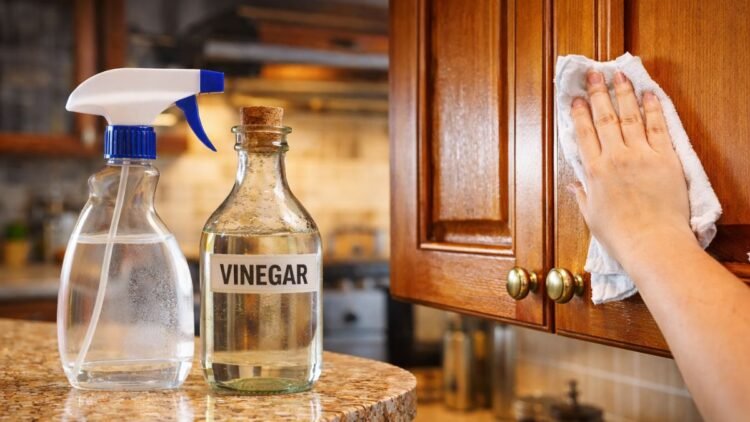
One Saturday morning, Claire decided it was finally time to tackle a problem she had ignored for months—her kitchen cabinets. Over the years, the once-glossy cabinet doors had slowly become dull and sticky due to a buildup of grease, fingerprints, and cooking residue.
No matter how often she wiped them down, the cabinets never seemed to regain their shine. Even after updating other parts of her kitchen with fresh paint and new countertops, the cabinets still looked worn and lifeless. Regular cleaning products had failed to remove the stubborn grime, leaving Claire frustrated.


That’s when she remembered something her grandmother used to say: “A little vinegar can fix a lot of things.”
Curious to see if the simple trick would work, Claire decided to give it a try.
The Unexpected Cleaning Hero: Vinegar
Vinegar is a household staple that many people keep in their kitchen cupboards, but it’s often overlooked as a cleaning solution. While modern cleaning products promise powerful results, this simple liquid has been used for generations to clean everything from windows to countertops.

The secret behind vinegar’s effectiveness lies in its natural acidity. The acetic acid in vinegar works as a powerful degreaser, helping break down the oily residue that builds up on kitchen cabinets over time.
Vinegar also has several advantages:
- It is non-toxic and environmentally friendly
- It effectively cuts through grease and grime
- It is affordable and widely available
- It helps restore shine to surfaces
For cabinets located near stovetops or cooking areas—where grease buildup is common—vinegar can be especially effective.
Bringing Cabinets Back to Life

Claire mixed equal parts white vinegar and warm water in a spray bottle and lightly sprayed the solution onto a soft cloth. She then began wiping down the cabinet doors.
Almost immediately, she noticed the difference. The vinegar solution started dissolving the layers of grease that had built up over the years. As she wiped the surface, the natural wood grain began to reappear.
With each cabinet she cleaned, the transformation became more noticeable. The once dull and sticky surfaces were now smooth and fresh, with a subtle shine returning to the wood.
By the time she finished, Claire’s kitchen looked completely refreshed—all thanks to a simple bottle of vinegar.
Why Vinegar Works So Well
The science behind vinegar’s cleaning power is simple. Because vinegar is acidic, it can break down stubborn grease, oils, and residue that stick to surfaces in the kitchen.
These greasy layers often come from:
- Cooking oils and butter
- Steam from cooking
- Natural oils from hands
- Food splatters and residue
Over time, these substances create a sticky film that soap and water alone may struggle to remove.
Vinegar dissolves these oils, making it easier to wipe them away. It also works as a mild disinfectant, helping reduce bacteria on kitchen surfaces.
Unlike many commercial cleaners that contain harsh chemicals, vinegar provides a natural and safe cleaning alternative for most household surfaces.
Other Ways Vinegar Can Help in the Kitchen
Once Claire discovered how effective vinegar was on her cabinets, she began using it for other cleaning tasks around the kitchen.
Some common uses include:
Cleaning countertops
A diluted vinegar solution can help remove food stains, grease, and sticky residue from many countertop surfaces.
Disinfecting kitchen appliances
Refrigerators, microwaves, and stovetops can all benefit from vinegar’s grease-cutting properties.
Removing unpleasant odors
Placing a small bowl of vinegar on the counter can help neutralize strong kitchen smells.
Unclogging drains
A mixture of vinegar and baking soda can help loosen minor clogs and clean kitchen drains.
A Simple Solution That Still Works
Claire’s experience is a reminder that sometimes the most effective cleaning solutions are the simplest ones. In a world full of expensive cleaning products, it’s easy to forget that basic household ingredients can often do the job just as well.
A bottle of vinegar sitting quietly in the pantry can restore shine, remove grease, and refresh kitchen surfaces with minimal effort.
The next time your cabinets begin to look dull or greasy, you may not need a specialized cleaner at all. Sometimes, the answer is already waiting in your cupboard.
FAQs
Can vinegar safely clean kitchen cabinets?
Yes, diluted white vinegar is safe for most cabinet surfaces and works well for removing grease and grime.
How do you clean cabinets with vinegar?
Mix equal parts vinegar and warm water, apply it to a soft cloth, and gently wipe the cabinet surface.
How often should kitchen cabinets be cleaned?
Light cleaning every 2–4 weeks helps prevent grease buildup and keeps cabinets looking shiny.