
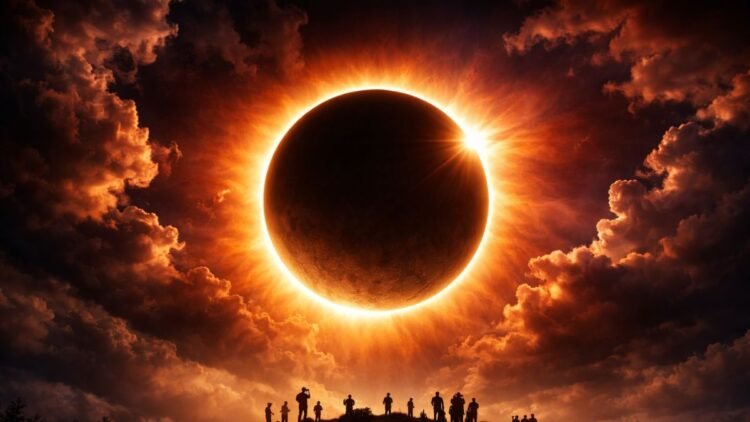
The sky will transform in a way few humans ever witness. One moment, sunlight will bathe the world in warmth and chatter; the next, the Moon will take a bite out of the Sun, and for six unforgettable minutes, day will feel like twilight.
This is the eclipse of the century—a rare total solar eclipse with a duration long enough to fully immerse yourself in the spectacle of a shadow crossing the Earth.
From city streets to remote coastlines, millions will experience this celestial event, yet only those standing in the path of totality will see its full magic: a mid-day darkness illuminated by the Sun’s ghostly corona.
Why This Eclipse Is Extraordinary
Total solar eclipses are already rare, and most last only a couple of minutes. But this one offers six minutes of totality—enough time to notice temperature drops, shifting winds, and the unusual behavior of animals. Birds go silent, crickets chirp, and the world takes on an ethereal quality.
During this eclipse, the Sun will vanish behind the Moon, revealing:
- The solar corona, a delicate halo of plasma shaped by the Sun’s magnetic field.
- Visible planets like Venus, and possibly Jupiter or Mars.
- Constellations normally hidden by daylight.
- A surreal 360-degree horizon bathed in sunset hues.
It’s not just a spectacle—it’s a reminder of our planet’s place in the vast machinery of the solar system.
When the Sky Will Go Dark
The eclipse’s timing depends on your location. The Moon’s shadow (umbra) will first touch Earth over the open ocean and sweep across the globe at thousands of kilometers per hour. Key phases include:
- Partial Eclipse: A subtle notch forms in the Sun’s disk. Shadows sharpen, colors dim, and daylight softens.
- Approaching Totality: “Shadow bands” ripple across surfaces; temperatures drop rapidly, and wildlife responds to the sudden twilight.
- Totality: The Sun disappears completely, and the six-minute dark phase begins for those along the central path of the umbra.
The duration of totality varies by location:
| Region | Max Totality | What to Expect |
|---|---|---|
| Central Ocean Track | ~6 minutes | Longest, darkest totality; mostly accessible by ship or expedition. |
| Coastal Landfall Areas | 5–6 minutes | Stunning twilight with good accessibility. |
| Inland Central Path | 4–5 minutes | Excellent for photography and calm observation. |
| Near Edges | 1–3 minutes | Fleeting totality, still magical. |
| Outside Path | None | Partial eclipse only; Sun appears as a crescent. |
Best Places to Watch
The path of totality is narrow—just a few hundred kilometers wide—but offers varied experiences:
- Coastal regions: Beaches and cliffs provide dramatic vistas of the shadow racing across the water.
- Inland plains and plateaus: Wide horizons offer unobstructed views of the corona and sunset-like horizon.
- Urban centers: City streets, rooftops, and parks allow a shared, collective experience of awe.
- At sea: Ships on the central track offer uninterrupted totality over the open ocean, creating an almost otherworldly setting.
Wherever you watch, preparation matters: weather, accessibility, and timing all influence your experience.
How to Prepare Safely
Protecting your eyes is critical. Never look at the Sun directly except during the brief totality. Use:
- Certified eclipse glasses
- Solar filters for binoculars or telescopes
Watch the partial phases carefully, noting Baily’s beads and the diamond ring effect. Only during full totality can you safely view the Sun with the naked eye.
Bring essentials: water, snacks, layers, and a plan for traffic and crowds. And for photography, set up in advance—capture a few shots, then immerse yourself in the moment.
Experiencing the Eclipse
Your experience can be communal or solitary:
- Festivals: Large gatherings, countdowns, telescopes, and shared excitement.
- Quiet observation: Remote roads, hills, or plateaus allow for reflective, personal engagement.
- Family experiences: Children may see the eclipse projected through leaves or a pinhole, offering a hands-on introduction to cosmic wonders.
Regardless of your location, the eclipse will create a shared, yet deeply personal, memory.
After the Shadow Passes
Totality ends suddenly. The Sun reappears, birds resume their calls, and streetlights flicker off. People cheer, hug, or simply pause. Even as the eclipse fades, its memory lingers—the colors, the hush, and the sense of standing beneath a perfectly aligned cosmic event.
The eclipse of the century is fleeting but unforgettable. For six minutes, the Sun vanishes, the corona glows, and the Earth takes on a magical twilight. Whether observed from a remote coast, city rooftop, or backyard, this celestial event reminds us of our place in the cosmos and leaves a memory that will last a lifetime.
FAQs
When will the eclipse occur?
The timing depends on your location. Astronomical organizations provide precise local schedules.
How long will totality last?
Up to six minutes along the central path of the umbra. Duration decreases toward the edges.
Where is the best place to watch?
Central ocean tracks, coastal landfalls, and wide inland plains offer the most immersive views.