


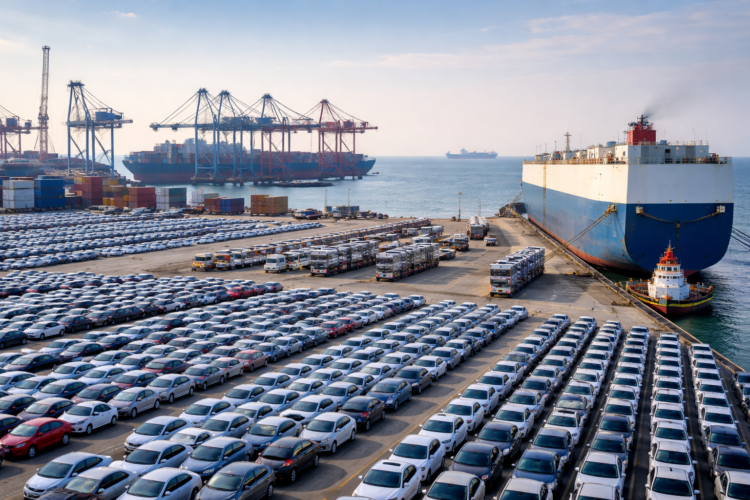
China has rapidly become the largest car exporter in the world, shipping millions of vehicles to international markets every year. However, growing concerns about “low-quality” exports, misleading vehicle classifications, and after-sales support have triggered regulatory action. In 2025 and 2026, Chinese authorities announced stricter oversight on certain automotive export practices, especially the export of “zero-mileage used cars.”
While many headlines claim China is cracking down on “low-quality car exports,” the reality is more nuanced. The government’s move focuses mainly on regulating misleading export practices, improving brand reputation, and protecting overseas buyers.


This article explains what China actually announced, what is rumor, and what the changes mean for global car buyers and importers.
China’s Explosive Rise As A Global Car Exporter
China’s auto industry has expanded dramatically in the past decade, especially with electric vehicles (EVs).
Key figures:
- China exported about 5.5 million vehicles globally in 2024, making it the world’s largest vehicle exporter.
- Nearly 40% of these exports were electric vehicles.
- EV exports alone reached 1.65 million units in 2024, nearly doubling year-on-year.

However, the rapid expansion also revealed issues such as overproduction, price wars, and questionable export practices, which eventually pushed regulators to act.
The “Zero-Mileage Used Car” Problem
One of the biggest issues in China’s auto export market is the rise of “zero-kilometre” or “zero-mileage” used cars. These vehicles are technically registered as used cars but are actually brand-new vehicles that have barely been driven.
Common characteristics include:
- Factory protective film still intact
- Very low mileage (sometimes just a few hundred kilometers)
- Registered briefly before export

This strategy became popular because it allowed companies to:
- Move excess inventory quickly
- Claim tax benefits or incentives
- Record higher sales figures
Industry data shows the scale of this practice:
- Around 1 million zero-mileage used car transactions occurred in China in 2024.
- This represented about 5% of the entire used-car market.
- China’s used-car exports jumped from 15,000 units in 2021 to 436,000 units in 2024.
- Estimates suggest 70–80% of exported used vehicles were actually zero-mileage cars.
These vehicles were mainly shipped to Russia, Central Asia, the Middle East, and Africa.
What China Actually Announced
The Chinese government has not announced a blanket ban on “low-quality car exports.” Instead, it introduced new regulations targeting misleading export practices. The policy titled “Notice on Further Strengthening the Management of Used Vehicle Exports” was released in November 2025.
Key Rules Starting January 1, 2026
- 180-Day Registration Rule
Vehicles registered for less than 180 days before export must meet stricter documentation requirements. - Manufacturer-Backed After-Sales Service
Exporters must provide a manufacturer-issued confirmation of after-sales support in the destination country. - Verified Export Documentation
Exporters must submit details including:
- vehicle information
- export destination
- service network availability
All documents must carry the manufacturer’s official seal.
- Stricter Licensing Oversight
Local commerce authorities will increase scrutiny on export licenses and compliance.
These measures are designed to ensure legitimate exports and proper service support for buyers abroad.
Rumors Vs Reality
Some media reports describe the policy as a “crackdown on low-quality Chinese cars.” However, this interpretation is partly misleading.
Rumor
China is banning low-quality vehicles from being exported.
Reality
The policy targets misleading export classifications and compliance issues, not vehicle quality itself.
The actual goal is to:
- Prevent new cars being exported as used cars
- Improve after-sales support overseas
- Protect the global reputation of Chinese car brands
Industry leaders themselves pushed for stricter oversight. For example, the chairman of Changan Automobile warned that the practice could “damage Chinese brands’ image abroad.”
Key Facts About China’s Export Crackdown
| Category | Details |
|---|---|
| Regulation announcement | November 2025 |
| Policy name | Notice on Further Strengthening the Management of Used Vehicle Exports |
| Implementation date | January 1, 2026 |
| Main target | “Zero-mileage used car” exports |
| Registration rule | Cars exported within 180 days need special approval |
| After-sales requirement | Manufacturer confirmation required |
| Used-car exports in 2024 | 436,000 vehicles |
| Estimated zero-mileage share | 70–80% |
| Major export markets | Russia, Central Asia, Middle East, Africa |
Why China Introduced The Crackdown
Several major industry problems triggered regulatory action.
1. Oversupply In The Domestic Market
China’s auto industry is facing intense competition and price wars. Manufacturers sometimes export vehicles just to clear inventory.
2. Artificially Inflated Sales Figures
Exporting new cars as used allowed companies to inflate sales statistics and qualify for incentives.
3. Poor Customer Experience Overseas
Many exported vehicles lacked official repair networks, spare parts, or software support, leading to complaints from international buyers.
4. Protecting Global Brand Reputation
Chinese brands such as BYD, Geely, Chery, and Great Wall are trying to build long-term global credibility, making stricter export controls necessary.
What It Means For Global Car Buyers
The new regulations will significantly change the international Chinese car market.
Positive Effects
- Better after-sales support
- Higher export transparency
- Stronger brand reliability
Possible Downsides
- Fewer discounted “almost new” vehicles
- Slightly higher export prices
- Stricter paperwork for importers
For buyers, the biggest benefit is greater confidence in vehicle support and authenticity.
Future Outlook For Chinese Car Exports
Despite the crackdown, China’s automotive exports are expected to continue growing.
Several trends will shape the future:
- More regulated export channels
- Expansion of EV exports
- Greater emphasis on quality and brand reputation
- More official global service networks
China’s long-term strategy is to transition from being known for cheap manufacturing to producing high-technology and globally competitive vehicles.
Conclusion
China’s so-called “low-quality car export crackdown” is widely misunderstood. In reality, the government is targeting grey-market export practices, particularly the export of zero-mileage vehicles disguised as used cars.
The new rules beginning in 2026 introduce stricter documentation, manufacturer-backed service guarantees, and stronger licensing oversight. While some rumors suggest China is restricting low-quality vehicles, the actual goal is to improve transparency, protect global consumers, and strengthen the reputation of Chinese automotive brands.
For international buyers, the changes should ultimately mean more reliable vehicles, better service support, and a more transparent car export market.
FAQs
Is China banning low-quality car exports?
No. The government is regulating misleading practices such as exporting new cars as used vehicles, not banning low-quality cars.
What are zero-mileage used cars?
They are brand-new cars registered briefly and exported as used vehicles, often with almost no mileage.
When do the new rules take effect?
The stricter export rules will officially start on January 1, 2026.