
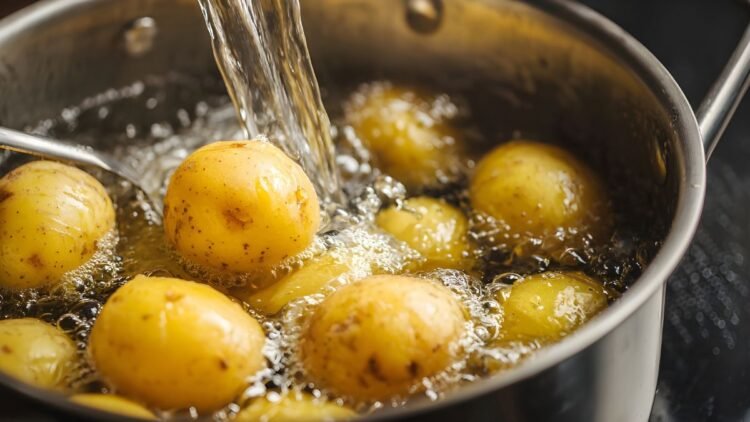
The last time I boiled potatoes in plain water, I realized they tasted like… nothing. Soft, edible, but bland at their core. Butter and salt could only do so much.
One evening, out of curiosity, I poured leftover roast chicken broth over the potatoes and let them simmer. Ten minutes later, the kitchen was filled with the aromas of garlic, thyme, and peppercorns.
The potatoes were tender, slightly golden at the edges, and bursting with flavor. From that day, plain water never touched my potato pot again.
Why Water Leaves Potatoes “Meh”
Boiling potatoes in water softens them, but it rarely gives them depth. Water simply transfers heat; it doesn’t add fragrance, flavor, or a rich aroma. In contrast, aromatic broth transforms the cooking process. The steam carries savory scents, and the potatoes absorb flavors from herbs, vegetables, and seasonings.
Potatoes cooked in broth act like sponges. They soak up the liquid’s umami, fat, and aromatic notes, producing a more flavorful and cohesive dish. Even a simple drizzle of olive oil or a pinch of pepper makes them irresistible.
How to Make Broth-Potatoes Like a Chef
Here’s the method I now use:
- Prep the base aromatics: Lightly sauté a crushed garlic clove, half an onion, and a small carrot in a thin layer of olive oil for 2–3 minutes.
- Add the liquid: Mix 2 parts low-salt vegetable or chicken stock with 1 part water. Add a bay leaf, a sprig of thyme, a few peppercorns, and optional lemon peel.
- Cook the potatoes: Drop medium-chunk potatoes into the simmering broth. Cook gently until tender, avoiding a rolling boil.
Tips:
- Use leftover broths from lentils, chickpeas, or roasted vegetables for convenience.
- Avoid overloading the pot with too many herbs — the goal is subtle fragrance, not overpowering perfume.
- Adjust salt gradually; broth reduces and concentrates flavor.
Optional Finishing Touches
- Drizzle olive oil or melt a knob of butter over the potatoes before serving.
- Add a hint of lemon zest or a fresh herb for brightness.
- Serve as a side to eggs, grilled fish, leftover roast, or even a simple salad — the potatoes will elevate the entire meal.
Why This Small Change Matters
Switching from water to broth is more than a flavor upgrade. It subtly changes the atmosphere of a meal. The kitchen smells inviting, the side dish becomes memorable, and even weeknight dinners feel a little more special.
Potatoes simmered in broth retain moisture, develop flavor from the inside out, and require no extra cooking time. Small, simple adjustments like this can transform everyday meals into comforting, restaurant-style dishes.
Table of Key Points
| Key Point | Detail | Value for the Reader |
|---|---|---|
| Switch water for broth | Use light vegetable or chicken stock | Adds depth and aroma instantly |
| Layer aromatics | Onion, garlic, carrot, bay leaf, small herb sprig | Produces restaurant-level flavor with basic ingredients |
| Finish with a touch | Olive oil, butter, lemon zest, or fresh herbs | Enhances flavor and presentation effortlessly |
FAQs
Can I use bouillon cubes instead of liquid broth?
Yes. Dilute them more than the package suggests and go light on additional salt. The goal is a gentle, aromatic liquid.
Which potatoes work best for this method?
Waxy or all-purpose potatoes (like Yukon Gold or firm salad potatoes) hold their shape and absorb flavor well. Floury types can break down faster.
Do I need to peel the potatoes?
Not if the skin is thin and clean. Leaving it on adds texture and helps trap flavor. Scrub well before cutting.
Can I reuse leftover cooking broth?
Yes. Strain and store in the fridge for a few days. Use it for soups, rice, or pan sauces.
How do I prevent potatoes from falling apart?
Simmer gently, cut uniform chunks, and start checking doneness a few minutes early. Avoid stirring too much.