
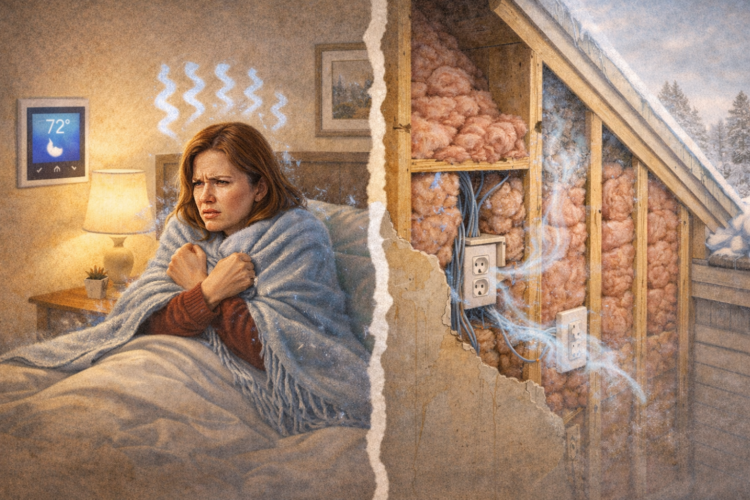
Many people experience a puzzling situation at home: the thermostat shows a comfortable temperature, yet the room still feels chilly. This common issue is not always related to the heating system. In reality, scientists and building experts explain that thermal comfort depends on multiple environmental and personal factors, not just the air temperature.
Understanding why some people feel colder at home despite normal temperatures can help homeowners improve comfort, reduce heating costs, and create healthier indoor environments. This article explores the hidden reasons behind this phenomenon, backed by modern research and building science.
Understanding Thermal Comfort: Why Temperature Alone Is Not Enough

When people think about warmth, they usually focus on air temperature. However, experts say that true indoor comfort is determined by a combination of several factors including humidity, air movement, radiant heat, clothing insulation, and metabolism.
Thermal comfort is essentially how satisfied a person feels with the temperature of their surroundings, which varies from person to person.
Key Factors That Influence Thermal Comfort
| Factor | Description | Impact On How Warm You Feel |
|---|---|---|
| Air Temperature | Actual measured room temperature | Primary indicator but not the only one |
| Relative Humidity | Moisture level in indoor air | Dry air can feel cooler |
| Air Velocity | Movement of air indoors | Moving air removes body heat faster |
| Mean Radiant Temperature | Heat radiating from walls, floors, and windows | Cold surfaces make rooms feel colder |
| Clothing Insulation | Type and thickness of clothing | Determines how much body heat is retained |
| Metabolic Rate | Body’s heat production based on activity | Active people feel warmer |
These combined factors explain why two rooms with the same temperature can feel completely different.
The Hidden Role Of Cold Surfaces And Radiant Heat

One of the most overlooked reasons people feel cold indoors is radiant heat loss. Radiant heat refers to the energy your body exchanges with surrounding surfaces like walls, windows, and floors. If the surfaces around you are cold, your body naturally radiates heat toward them, making you feel colder even if the air temperature is comfortable.
For example, a person standing near a poorly insulated window may feel chilly because the glass surface absorbs body heat through radiation.
Common sources of cold radiant surfaces include:
- Single-pane windows
- Poorly insulated walls
- Tile or stone flooring
- Unheated basement floors

Improving insulation or adding curtains can significantly reduce this effect.
Humidity Levels Can Make Rooms Feel Colder
Another hidden factor is indoor humidity. Very dry air can make rooms feel colder because the body loses heat more quickly and the skin dries out. Conversely, slightly higher humidity can make the same temperature feel warmer and more comfortable.
Most experts recommend maintaining indoor humidity between 40% and 60% for optimal comfort. Low humidity often occurs during winter because heating systems dry the air inside homes. This is why people sometimes feel cold even when the thermostat reads 21°C (70°F).
Air Movement And Indoor “Wind Chill”
Many homeowners overlook the impact of air movement indoors. Even small drafts from windows, doors, or ventilation systems can create a wind-chill effect, increasing heat loss from the body and making the environment feel colder.
Common causes of indoor drafts include:
- Poorly sealed windows and doors
- Air leaks in walls or ceilings
- HVAC airflow imbalance
- Ceiling fans running at high speed
Sealing leaks and adjusting airflow can dramatically improve comfort.
Poor Insulation And Hidden Heat Loss
Insulation plays a major role in maintaining indoor warmth. If a home lacks proper insulation, heat escapes through the building envelope, making rooms feel colder despite heating.
Heat commonly escapes through:
- Attics
- Exterior walls
- Windows
- Doors
- Floors above crawl spaces
Drafty windows and doors also allow cold air to enter while warm air escapes, which makes the heating system work harder. Modern homes with improved insulation often feel warmer even at slightly lower thermostat settings.
Personal Factors That Affect How Warm You Feel
Thermal comfort is also influenced by individual physiological differences.
Personal Reasons Some People Feel Colder
- Metabolism Differences
People with lower metabolic rates produce less body heat. - Body Composition
Individuals with lower body fat often feel colder. - Health Conditions
Certain medical issues or poor nutrition can increase cold sensitivity. - Clothing Choices
Lightweight clothing indoors reduces heat retention.
These factors explain why two people sitting in the same room may experience different levels of comfort.
Furniture Placement Can Block Heat Distribution
Another surprising cause is furniture blocking heat sources. Large sofas, rugs, or cabinets placed in front of radiators or vents can prevent warm air from circulating properly, leaving certain areas of a room cooler.
Simply rearranging furniture can improve heat distribution and make a room feel warmer.
Quick Solutions To Make Your Home Feel Warmer
If your home feels cold despite normal temperatures, consider these practical improvements:
- Improve insulation around windows and doors
- Use thermal curtains or double-glazed windows
- Maintain indoor humidity around 40–60%
- Seal drafts and air leaks
- Adjust HVAC airflow and ventilation
- Avoid blocking radiators or vents
- Add rugs to cold floors
- Wear layered clothing indoors
These changes can significantly improve thermal comfort without increasing heating costs.
The Future Of Indoor Comfort Technology
Advancements in building technology are helping homeowners achieve better comfort while reducing energy use. Smart thermostats, humidity sensors, and AI-based climate control systems are being developed to monitor multiple thermal comfort factors simultaneously.
These systems can automatically adjust temperature, airflow, and humidity based on occupant behavior and environmental conditions. Future homes may rely on adaptive climate systems that personalize indoor environments for each occupant.
Conclusion
Feeling cold indoors despite normal temperatures is more common than many people realize. The reason lies in thermal comfort science, which shows that factors such as humidity, radiant heat, air movement, insulation, and personal physiology all influence how warm we feel.
By understanding these hidden factors, homeowners can improve comfort without simply turning up the thermostat. Small changes like sealing drafts, adjusting humidity, or improving insulation can make a home feel significantly warmer while saving energy.
As building technology evolves, smarter climate systems will continue to transform how we manage indoor comfort in the future.
FAQs
Why does my house feel colder than the thermostat reading?
Because comfort depends on humidity, air movement, insulation, and radiant heat from surfaces—not just air temperature.
What temperature should a house be for comfort?
Most experts recommend indoor temperatures between 18°C and 22°C (64°F–72°F) for healthy living conditions.
Can humidity really affect how warm a room feels?
Yes. Low humidity can make the air feel colder, while moderate humidity levels help retain body heat.