
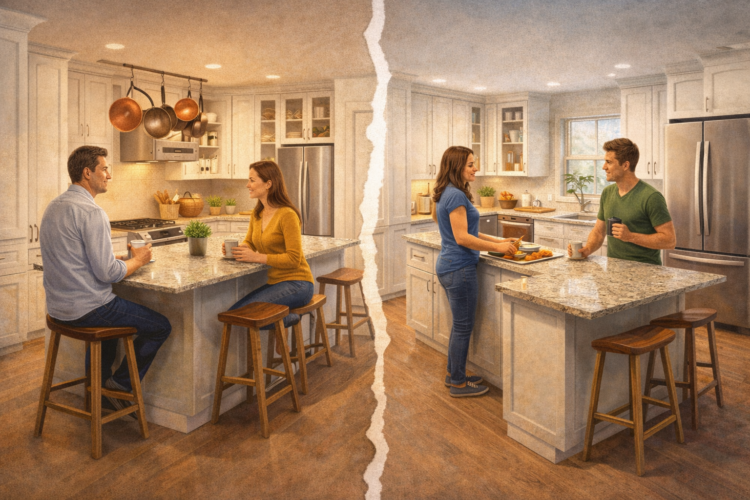
Kitchen Islands have long been considered the centerpiece of modern kitchens. For decades, homeowners and designers promoted them as the perfect solution for cooking, entertaining, and gathering with family. A typical kitchen island can function as a prep station, dining area, storage space, and social hub all in one structure.
However, design trends in 2026 are shifting significantly, especially as homes and apartments become smaller. Many interior designers now argue that large islands often consume valuable space, disrupt workflow, and create traffic congestion in compact kitchens.

Instead of one oversized centerpiece, experts are promoting zoned kitchens and flexible worktables that allow homeowners to organize their kitchens more efficiently. These new layouts prioritize movement, adaptability, and smart storage, making them particularly practical for small homes.
This shift does not mean kitchen islands are disappearing entirely, but the traditional large fixed island is no longer the default design choice in modern kitchens.
Why Kitchen Islands Are Losing Popularity in 2026
Kitchen islands still exist in many homes, but designers say they are no longer the default choice for modern kitchens.
1. They Take Up Too Much Space

A traditional kitchen island requires a large clearance area around it. Most designers recommend at least 90–120 cm (36–48 inches) of walking space on all sides.
For small homes, that means:
- Reduced floor space
- Crowded cooking zones
- Limited storage placement
When the kitchen is compact, the island often becomes an obstacle rather than a helpful feature.
2. They Create Traffic Bottlenecks

In busy households, multiple people often use the kitchen at once. A large island can block the path between:
- Refrigerator
- Sink
- Stove
Designers say this causes “traffic jams” in small kitchens, especially during meal preparation.
3. Modern Homes Need Flexible Spaces
Modern lifestyles require kitchens to function as:
- workspace
- coffee station
- homework area
- dining space
Large fixed islands cannot adapt easily to these changing needs.
The 2026 Trend Replacing Kitchen Islands: Zoned Kitchens
The layout trend gaining popularity in 2026 is the “zoned kitchen.” Instead of one central island, the kitchen is divided into dedicated functional areas, allowing better movement and efficiency.
Designers now organize kitchens into zones such as:
- Cooking zone
- Prep zone
- Cleaning zone
- Storage zone
- Beverage or coffee zone
- Dining or snack zone
This design makes the kitchen more intuitive and reduces unnecessary movement while cooking. It also allows multiple people to work in the kitchen at the same time without interfering with each other.
Worktables and Movable Prep Stations
Another trend replacing large islands is the freestanding kitchen worktable. These are similar to traditional kitchen tables but designed specifically for food preparation.
Key advantages include:
- Mobility
- flexible placement
- additional seating
- easier cleaning
- adaptable layouts
Some designers describe them as “furniture-style kitchens” because they feel more like living spaces rather than industrial work areas.
Worktables can also serve as:
- dining tables
- prep surfaces
- baking stations
- casual breakfast counters
Table: Traditional Kitchen Islands vs. 2026 Zoned Layout
| Feature | Traditional Kitchen Island | 2026 Zoned Kitchen Layout |
|---|---|---|
| Space Requirement | Large floor area needed | Works in small kitchens |
| Flexibility | Fixed structure | Flexible and customizable |
| Movement Flow | Can cause congestion | Smooth traffic flow |
| Storage Options | Limited to island cabinets | Distributed storage zones |
| Multi-User Cooking | Often crowded | Multiple zones allow shared use |
| Adaptability | Hard to modify | Easy to reconfigure |
Why Zoned Kitchens Are Perfect for Small Homes
The average size of new homes and apartments has been shrinking in many countries. This means homeowners must maximize every square meter of space.
Here is why the zoned layout works better:
1. Better Space Optimization
By eliminating a large island, designers can:
- widen walkways
- add extra cabinets
- create pantry areas
Walk-in pantries and secondary prep spaces are becoming increasingly popular in modern kitchens.
2. Improved Workflow
Instead of walking around a large island, zoned kitchens place tools and ingredients closer to where they are needed.
For example:
- coffee machines near mugs
- snacks near the refrigerator
- dish storage near the dishwasher
This reduces unnecessary steps while cooking.
3. More Storage Opportunities
Small homes need smart storage solutions.
Zoned kitchens allow designers to add:
- vertical cabinets
- hidden drawers
- pull-out pantry shelves
- appliance garages
These features keep the kitchen clutter-free.
4. Multi-Purpose Living Spaces
Modern kitchens often merge with living or dining areas. A flexible layout allows the space to transform for:
- family meals
- entertaining guests
- remote work
- social gatherings
Other Kitchen Design Trends Supporting This Shift
Several additional trends are reinforcing the move away from traditional islands.
Broken-Plan Kitchens
Fully open kitchens are being replaced by semi-open or “broken-plan” designs that create more privacy and better noise control.
Hidden Storage
Appliance garages and concealed cabinets help kitchens appear cleaner and less cluttered.
Walk-In Pantries
Many designers are moving small appliances and bulk food storage into separate pantry spaces, freeing up the main kitchen area.
Future Kitchen Design: What Experts Predict
Looking ahead to the late 2020s, kitchen design is expected to focus on:
- modular furniture-style layouts
- integrated appliances
- multi-functional workstations
- ergonomic workflow planning
- sustainable materials
Technology will also play a bigger role, with smart appliances, automated lighting, and integrated storage systems becoming standard in modern kitchens. These innovations will further support flexible layouts instead of fixed structures like traditional islands.
Conclusion
The statement “kitchen islands are out in 2026” reflects a broader shift in interior design priorities. Homeowners today value efficiency, flexibility, and smart space planning more than large statement features. The emerging solution is the zoned kitchen layout, supported by movable worktables, hidden storage, and dedicated prep areas. This design allows kitchens to function better in small homes while remaining stylish and practical.
As homes continue to evolve, the kitchen will remain the heart of the house—but its design will increasingly focus on adaptability, workflow, and efficient use of space rather than oversized islands.
FAQs
Are Kitchen Islands Completely Out of Style in 2026?
No. Kitchen islands are still used in large kitchens, but designers are moving away from them as the default feature, especially in small homes.
What Is a Zoned Kitchen Layout?
A zoned kitchen layout divides the kitchen into separate functional areas such as cooking, prep, cleaning, and storage to improve workflow and organization.
What Is the Best Alternative to a Kitchen Island?
Freestanding worktables, breakfast counters, and movable prep stations are popular alternatives because they provide flexibility and take up less space.