
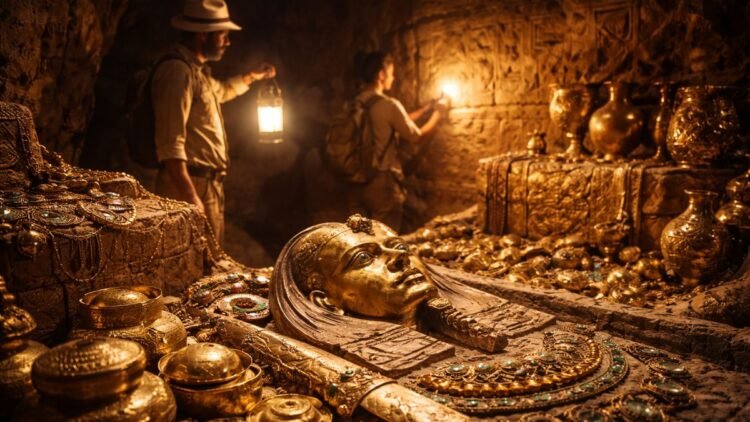
Archaeologists in southern Spain have made an extraordinary discovery that is shedding new light on ancient civilizations. Researchers recently uncovered a 5,000-year-old stone-built tomb in Málaga, a site that experts believe could be one of the most significant prehistoric monuments found in the region.
The tomb, measuring approximately 42 feet (about 13 meters) in length, is remarkably well preserved and filled with valuable artifacts. The discovery has excited archaeologists because it offers a rare opportunity to study burial traditions and cultural practices from thousands of years ago.

Experts believe the site may provide important insights into how early communities in the Iberian Peninsula lived, honored their dead, and expressed their cultural identity.
A Monumental Discovery in Southern Spain
The tomb was discovered in Málaga, located in the Andalusia region of Spain, an area known for its rich archaeological heritage. Researchers say the structure is a dolmen, a type of ancient megalithic tomb built using large stones.
Dolmens were typically constructed during the Neolithic period, when early agricultural societies began developing complex burial rituals. These stone structures were often used as communal graves where members of a community were buried together.

According to Serafín Becerra, a professor at the University of Cádiz, the recently discovered tomb may be one of the most impressive dolmens in the region.
He explained that the monument could be among the most complete and monumental examples of prehistoric burial architecture in Andalusia. Its size, structure, and level of preservation make it an especially valuable archaeological find.
What Makes This Tomb So Remarkable?
One of the most exciting aspects of the discovery is how well the tomb has been preserved. Despite being more than five millennia old, much of the stone structure remains intact.

The tomb stretches 42 feet long, making it significantly larger than many other similar sites found across Spain. This suggests that the tomb may have belonged to an important group or community.
Archaeologists believe the structure was carefully built using massive stones arranged in a chamber-like formation. The design would have required considerable effort and coordination, indicating that ancient societies had developed sophisticated construction techniques.
The exceptional condition of the tomb allows researchers to study details that are often lost at other archaeological sites.
Ancient Artifacts Reveal Cultural Practices
Inside the tomb, archaeologists discovered a wide range of artifacts and cultural objects. These items are believed to have been placed there as part of burial rituals performed thousands of years ago.
Artifacts found at the site may include:
- Ceramic pottery
- Stone tools
- Decorative objects
- Burial offerings
These items can reveal important information about daily life, beliefs, and spiritual traditions of ancient communities.
Researchers believe the objects were likely placed in the tomb as offerings to accompany the deceased into the afterlife. Such practices were common in many prehistoric cultures and often reflected a society’s beliefs about death and the spiritual world.
By studying the materials, design, and placement of these artifacts, archaeologists can gain a deeper understanding of the people who built and used the tomb.
What This Discovery Means for Archaeology
The discovery of this dolmen is particularly significant because it may provide new clues about the social and cultural organization of Neolithic societies in southern Spain.
Archaeologists are now carefully studying the tomb and its contents to determine:
- How the structure was built
- Who was buried there
- What the artifacts reveal about ancient traditions
The findings may also help researchers better understand how prehistoric communities interacted with each other and how burial customs evolved over time.
In addition, the discovery contributes to the broader study of megalithic architecture, which includes ancient stone monuments found across Europe.
Conclusion
The discovery of a 5,000-year-old tomb in Málaga, Spain, is a remarkable milestone for archaeologists studying ancient civilizations. With its impressive size, exceptional preservation, and wealth of artifacts, the tomb offers a rare glimpse into the lives and beliefs of people who lived thousands of years ago.
As researchers continue to examine the site, the findings could reveal valuable information about Neolithic culture, burial traditions, and early architectural techniques in southern Europe.
This ancient monument stands as a powerful reminder that even after thousands of years, the past still holds many secrets waiting to be uncovered.
FAQs
What is a dolmen?
A dolmen is a type of prehistoric stone tomb built using large upright stones and a flat stone roof. These structures were commonly used for communal burials during the Neolithic period.
Where was the 5,000-year-old tomb discovered?
The tomb was discovered in Málaga, Spain, located in the Andalusia region in southern Spain.
Why is this discovery important?
The tomb is important because it is well preserved and contains artifacts that can help archaeologists understand ancient burial practices, cultural traditions, and early architectural techniques.