
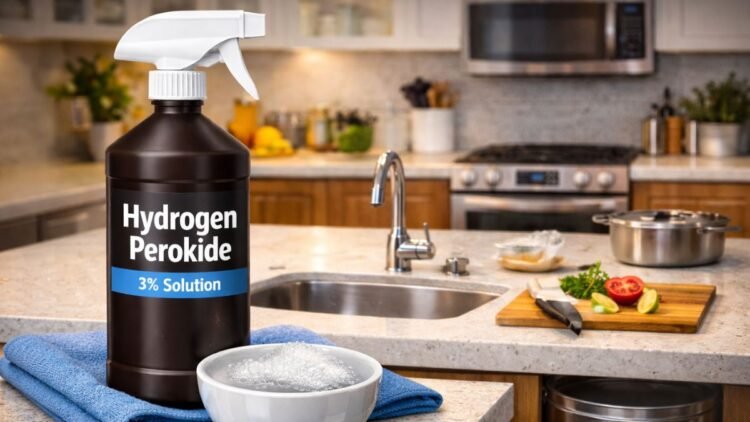
Hydrogen peroxide is a common household product that most people keep in their medicine cabinet for first aid. However, this simple solution can also be one of the most effective and affordable kitchen cleaning tools.
Known for its disinfecting properties, hydrogen peroxide helps remove grime, kill bacteria, and sanitize surfaces without leaving harmful chemical residues.

Because hydrogen peroxide breaks down into water and oxygen, it is considered a safer and more environmentally friendly alternative to many harsh chemical cleaners. With the right method, it can be used to clean almost every part of your kitchen—from countertops to cutting boards.
Why Hydrogen Peroxide Is Effective for Kitchen Cleaning
Hydrogen peroxide works as both an antiseptic and oxidizing agent. This means it can destroy harmful microorganisms such as bacteria, viruses, fungi, and yeast. At the same time, it helps lift stubborn stains and grime from surfaces.
One of the key benefits of hydrogen peroxide is that it breaks down naturally into water, leaving no chemical residue behind. This makes it ideal for areas where food is prepared.

Hydrogen peroxide can safely clean many kitchen surfaces, including:
- Kitchen countertops
- Cabinet handles and drawer knobs
- Appliance handles and touchscreens
- Cooktops and stovetops
- Refrigerator and freezer interiors
- Dishwasher interiors
- Kitchen sinks
- Cutting boards
- Dishes and cookware
- Floors
- Garbage cans
Hydrogen Peroxide as a Stain Remover
In addition to cleaning the kitchen, hydrogen peroxide is also known for its ability to remove stains and brighten fabrics. Many people use it in the laundry room to whiten clothes or remove tough stains from fabrics.
Its mild bleaching action helps break down organic stains such as food spills, grease marks, and discoloration, making it a versatile cleaning product for the entire home.
Choosing the Right Hydrogen Peroxide Solution

For household cleaning, the standard 3% hydrogen peroxide solution is usually strong enough. This concentration is commonly sold in pharmacies and grocery stores.
Fresh hydrogen peroxide works best. Once a bottle is opened, it generally remains effective for about six months, while an unopened bottle can last for about one year.
To check if your hydrogen peroxide is still active, pour a small amount into a bowl. If it produces bubbles or fizz, it is still effective. If no fizz appears, it may be time to replace the bottle.
Because hydrogen peroxide is sensitive to light, it should always be stored in a dark container.
How to Clean Countertops, Hardware, and Appliances
Cleaning everyday kitchen surfaces with hydrogen peroxide is simple.
- Attach a spray nozzle to the bottle for easy use.
- Lightly spray the surface you want to clean.
- Let the solution sit for 5–7 minutes to disinfect and loosen grime.
- Wipe the surface with a clean microfiber cloth.
This method works well for countertops, cabinet hardware, appliance handles, and cooktops.
Removing Stubborn Grime from Sinks and Counters
For tougher messes, hydrogen peroxide can be combined with baking soda.
- Spray hydrogen peroxide on the dirty surface.
- Sprinkle baking soda over the wet area.
- Use a sponge or cloth to gently scrub the surface.
- Rinse thoroughly with water.
Baking soda acts as a mild abrasive, helping remove stuck-on grime without scratching surfaces.
Cleaning Floors and Garbage Cans
Hydrogen peroxide can also be used to clean kitchen floors and eliminate unpleasant odors from garbage bins.
To make a cleaning solution:
- Mix one part hydrogen peroxide with one part water.
You can then:
- Mop floors using a microfiber mop.
- Rinse garbage cans to remove odors and bacteria.
Allow surfaces to air dry after cleaning.
Sanitizing Cutting Boards, Dishes, and Cookware
Hydrogen peroxide is especially useful for sanitizing food preparation tools.
Cutting boards:
Spray the board lightly with hydrogen peroxide and let it sit for 10 minutes before rinsing.
Cookware:
Spray hydrogen peroxide and add baking soda to remove burned or stuck-on food.
Dishes:
Wash dishes normally, then spray hydrogen peroxide and allow it to sit for 10 minutes before rinsing.
Conclusion
Hydrogen peroxide is a powerful yet simple cleaning solution that can help keep your kitchen hygienic and fresh. Its ability to kill germs, remove stains, and break down safely into water makes it a reliable option for everyday cleaning.
With just one bottle of hydrogen peroxide, you can disinfect countertops, clean appliances, sanitize cutting boards, and even freshen garbage cans. When used correctly, it becomes an effective and affordable addition to any kitchen cleaning routine.
FAQs
Is hydrogen peroxide a good disinfectant for the kitchen?
Yes. Hydrogen peroxide is an effective disinfectant that kills bacteria, viruses, fungi, and other microorganisms on hard surfaces.
Can hydrogen peroxide be mixed with vinegar for cleaning?
No. Hydrogen peroxide should never be mixed directly with vinegar because the combination can create peracetic acid, which can be irritating and corrosive.
Why should hydrogen peroxide be stored in a dark bottle?
Hydrogen peroxide is highly sensitive to light. Exposure to light causes it to break down into water, which reduces its cleaning and disinfecting effectiveness.