


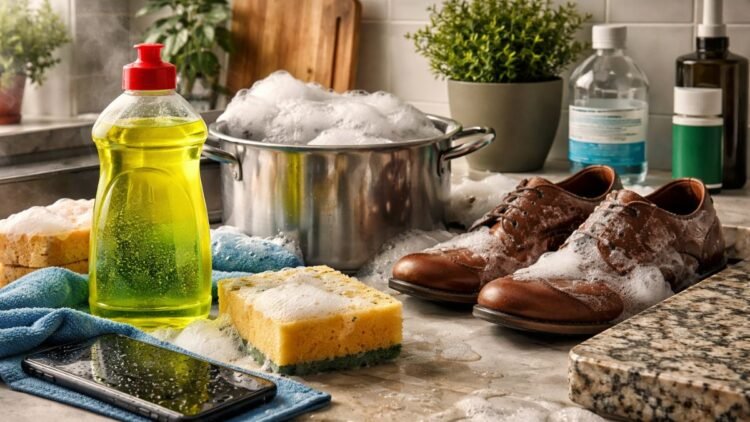
Dish soap is a common household cleaner found in nearly every kitchen. Its strong grease-cutting ability helps remove stubborn food residue from dishes such as casseroles, chili pots, and dessert pans. Because it works so well and is easily available, many people assume it can safely clean almost anything around the house.
However, the same chemicals that make dish soap effective on plates and cookware can damage certain surfaces and materials. Using it in the wrong places may lead to fading, cracking, staining, or mechanical problems. Cleaning specialists warn that several household items require specific products rather than dish soap.


Below are some things experts say should not be cleaned with dish soap.
Why Dish Soap Isn’t Always the Best Cleaning Solution
Dish soap is formulated to break down grease and food residue quickly. While that makes it ideal for washing dishes, its powerful degreasing properties can strip protective coatings, remove natural oils, and leave unwanted residue on certain materials.
Cleaning professionals recommend understanding where dish soap works safely and where specialized cleaning products should be used instead.
Cars: Dish Soap Can Damage Vehicle Paint

Experts advise avoiding dish soap when washing your car. According to cleaning trainer Taylor Riley of Boom Facility Service Advisors, dish soap is far too strong for automotive paint.
Although it effectively removes grease from cookware, it also removes the protective wax layer on vehicles. Over time, this can dull the paint and make it more vulnerable to scratches, fading, and environmental damage. For proper maintenance, car owners should use cleaners specifically designed for automotive finishes.
Leather: Removes Natural Oils
Leather requires careful maintenance to preserve its softness and durability. Marla Mock, president of Molly Maid, explains that dish soap can remove the natural oils that keep leather conditioned.

When those oils are stripped away, leather items such as furniture, jackets, or bags may become dry and eventually crack. Instead, professionals recommend using leather-specific cleaners like saddle soap to protect the material.
Flat Paint Walls: Can Cause Streaks and Damage
Flat paint finishes are delicate and do not respond well to harsh cleaners. Operations manager James King from DeluxeMaid warns that dish soap can leave visible streaks or even damage the paint surface.
A safer method is wiping the wall gently with a microfiber cloth dampened with distilled water. Since distilled water contains no minerals, it dries without leaving marks. If additional cleaning power is needed, a small amount of vinegar or a magic eraser can be used carefully.
Clothing: Not Suitable for Laundry
Dish soap should not replace laundry detergent. Livingstone from Home Spritz explains that it does not rinse completely from clothing, which may cause skin irritation.
Additionally, modern washing machines—especially front-load models—use less water. Dish soap produces excessive foam, which can interfere with the washer’s pump system during the drain cycle. This may cause the machine to stop and display an error message.
Dishwashers: Causes Excessive Foam
Running out of dishwasher detergent might tempt you to substitute dish soap, but experts strongly advise against it.
Dishwashers are designed for low-sudsing detergent formulas. Regular dish soap creates too many bubbles, which can overflow from the machine and spread foam across the kitchen floor. Besides creating a messy cleanup, excessive suds may damage the appliance over time.
Silk: Requires Specialized Detergent
Silk is a delicate fabric that requires gentle care. According to Marla Mock, using dish soap can harm silk fibers.
Instead, use a detergent formulated specifically for silk fabrics. A mild alternative is baby shampoo combined with a small amount of vinegar, which helps clean the fabric without causing damage.
Hardwood Floors and Furniture: Can Strip Protective Finish
Dish soap is also unsuitable for hardwood floors and furniture, particularly those treated with wax or oil finishes.
Taylor Riley explains that repeated use of dish soap can gradually remove the wood’s protective layer. This may lead to dull, dry surfaces that are more vulnerable to scratches and wear. In severe cases, the finish may deteriorate enough to require costly refinishing. Wood-specific cleaners that are gentle and pH-balanced are a safer option.
Coffee Makers: Never Run Soapy Water Through the Machine
While dish soap is fine for cleaning the exterior of a coffee maker, it should never be used inside the machine.
James King explains that running soapy water through the coffee maker creates excessive bubbles. Instead, fill the water reservoir with equal parts distilled water and vinegar, place a filter in the basket, and run a brewing cycle. Afterward, run two additional cycles with plain water to remove any vinegar residue.
If there is still concern about leftover vinegar taste, brewing a strong pot of coffee afterward can help eliminate any remaining flavor.
Conclusion
Although dish soap is one of the most versatile cleaners in the kitchen, it is not suitable for every cleaning task. Its powerful grease-cutting formula can strip protective coatings, damage delicate materials, and even harm appliances when used incorrectly. Understanding which surfaces require specialized cleaning products can help prevent unnecessary damage and extend the life of household items. By choosing the right cleaner for each job, homeowners can maintain their belongings safely and effectively.
FAQs
1. Can dish soap be used for general household cleaning?
Yes, it can clean many surfaces like countertops or dishes, but some materials require specialized cleaners.
2. Why shouldn’t dish soap be used on cars?
It removes the protective wax layer and may dull or damage the vehicle’s paint.
3. Is dish soap safe for washing clothes?
No, it can cause excessive foam in washing machines and may leave residue that irritates skin.
4. What is the safest way to clean coffee makers?
Use a mixture of distilled water and vinegar, followed by plain water cycles to rinse the machine.
5. Can dish soap damage hardwood floors?
Yes, repeated use may remove the protective finish and make wood surfaces dull or prone to damage.