


Hip flexibility is essential for maintaining good posture, preventing injuries, and improving overall mobility. Modern lifestyles often involve long hours of sitting at desks, driving, or using digital devices. Over time, this sedentary routine can cause tight hip flexors, reduced mobility, and even lower back pain.
Practicing yoga regularly is one of the most effective ways to improve hip flexibility. Yoga stretches and strengthens the muscles surrounding the hips, helping release tension while increasing range of motion. Even dedicating a few minutes a day to targeted hip-opening poses can make a noticeable difference in how your body feels and moves.


Below are seven powerful yoga poses that can help improve hip flexibility, reduce stiffness, and support long-term joint health.
Why Hip Flexibility Matters
The hip joint is one of the largest and most important joints in the body. It connects the upper body to the lower body and plays a crucial role in everyday movements such as walking, bending, sitting, and exercising.
When hip muscles become tight or weak, it can lead to:
- Lower back pain
- Poor posture
- Reduced mobility
- Increased risk of injury
- Difficulty performing daily activities

Improving hip flexibility through yoga can relieve tension, enhance circulation, and support better overall body alignment.
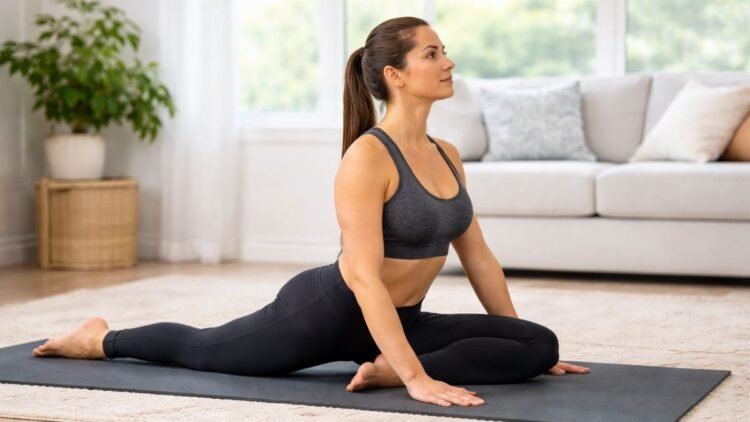
1. Pigeon Pose (Eka Pada Rajakapotasana)
Pigeon Pose is one of the most effective yoga poses for opening the hips and stretching the hip flexors.
To perform this pose, bring one leg forward and bend it at roughly a 90-degree angle while extending the other leg straight behind you. The pose stretches the glutes, hip flexors, and outer hips.

Benefits:
- Releases tension in the hips
- Improves joint mobility
- Reduces tightness caused by prolonged sitting
Holding the pose for several breaths allows the muscles to gradually relax and lengthen.
2. Low Lunge Pose (Anjaneyasana)
Low Lunge is a dynamic pose that both stretches and strengthens the hip region.
Step one foot forward and bend the front knee while keeping the back leg extended behind you. Lower the back knee to the floor for added support.
Benefits:
- Stretches the hip flexors deeply
- Strengthens the quadriceps and glutes
- Improves balance and stability
This pose is especially beneficial for people who spend long hours sitting.
3. Forward Fold (Uttanasana)
Forward Fold is a simple but powerful stretch that targets multiple muscle groups, including the hips.
Stand with your feet hip-width apart and slowly bend forward from the hips while keeping your legs straight. Allow your head and upper body to relax toward the floor.
Benefits:
- Stretches the hamstrings and hips
- Relieves tension in the lower back
- Promotes relaxation through deep breathing
Taking slow breaths while holding the pose helps deepen the stretch.
4. Butterfly Pose (Baddha Konasana)
Butterfly Pose is a gentle but effective hip opener.
Sit on the floor with the soles of your feet together and your knees dropped outward. Hold your feet and gently press your knees toward the floor.
Benefits:
- Opens the inner thighs and hips
- Improves circulation in the pelvic area
- Reduces stiffness in the hip joints
This pose is excellent for beginners and can be held for longer periods.
5. Bridge Pose (Setu Bandhasana)
Bridge Pose strengthens the muscles around the hips while stretching the hip flexors.
Lie on your back with your knees bent and feet flat on the floor. Lift your hips upward while pressing your feet and shoulders into the mat.
Benefits:
- Strengthens glutes and lower back
- Stretches hip flexors
- Improves posture and spinal support
6. Garland Pose (Malasana)
Garland Pose, also known as a deep squat, is another effective hip opener.
Lower your body into a squat with your feet slightly wider than hip-width apart. Bring your palms together at your chest and gently press your elbows against your knees.
Benefits:
- Opens hips and groin muscles
- Improves ankle and hip mobility
- Enhances lower body flexibility
7. Frog Pose (Mandukasana Variation)
Frog Pose provides an intense stretch for the inner thighs and hips.
Start on all fours and slowly widen your knees while keeping your feet aligned with the knees. Lower your hips toward the floor.
Benefits:
- Deeply stretches inner hips
- Improves range of motion
- Relieves hip tightness
This pose should be practiced slowly to avoid overstretching.
Tips for Practicing Hip Flexibility Yoga
To get the best results from these poses:
- Practice 3–4 times per week
- Hold each pose for 20–30 seconds
- Focus on slow, deep breathing
- Avoid forcing the stretch if you feel pain
Consistency is key when improving flexibility.
Conclusion
Hip flexibility is vital for maintaining mobility, preventing injuries, and improving posture. Tight hip flexors are common due to modern sedentary lifestyles, but regular yoga practice can help release tension and restore movement.
By incorporating poses such as Pigeon Pose, Low Lunge, Forward Fold, Butterfly Pose, Bridge Pose, Garland Pose, and Frog Pose into your routine, you can strengthen and stretch the muscles around your hips. Over time, these exercises can reduce stiffness, enhance mobility, and support overall physical well-being.
Practicing these poses consistently can help you move more freely, feel less discomfort, and maintain healthier joints for years to come.
FAQs
How often should I practice yoga to improve hip flexibility?
Practicing yoga three to four times per week can significantly improve hip flexibility and mobility over time.
Can yoga help relieve tight hip flexors?
Yes, yoga poses like pigeon pose, low lunge, and butterfly pose help stretch and release tight hip flexor muscles.
How long should each yoga pose be held?
Most yoga poses should be held for 20–30 seconds, focusing on slow breathing to deepen the stretch safely.